Med Spa Infection Control and Clinical Safety Protocols
Med spa infection control involves the systematic application of sanitation and sterilization protocols to prevent the transmission of pathogens during aesthetic procedures. These OSHA-aligned practices focus on surface disinfection, instrument processing, and personal hygiene to maintain a sterile treatment environment and protect both practitioners and clients from clinical cross-contamination.
OSHA-Aligned Sanitation Protocols
Establishing a safe med spa environment begins with rigorous sanitation protocols that align with federal safety standards. These systems prioritize the health of the clinical team and the safety of every person entering the facility.
Hand Hygiene Standards
Clinicians must follow a strict hand-washing schedule using antimicrobial soap before and after every patient interaction. This process includes scrubbing for at least twenty seconds and using single-use disposable towels to prevent re-contamination.
Personal Protective Equipment Usage
The consistent use of personal protective equipment, such as medical-grade gloves and masks, is mandatory for all aesthetic procedures. PPE acts as a critical barrier between the practitioner and potential biological hazards during treatment.
Treatment Room Disinfection Systems
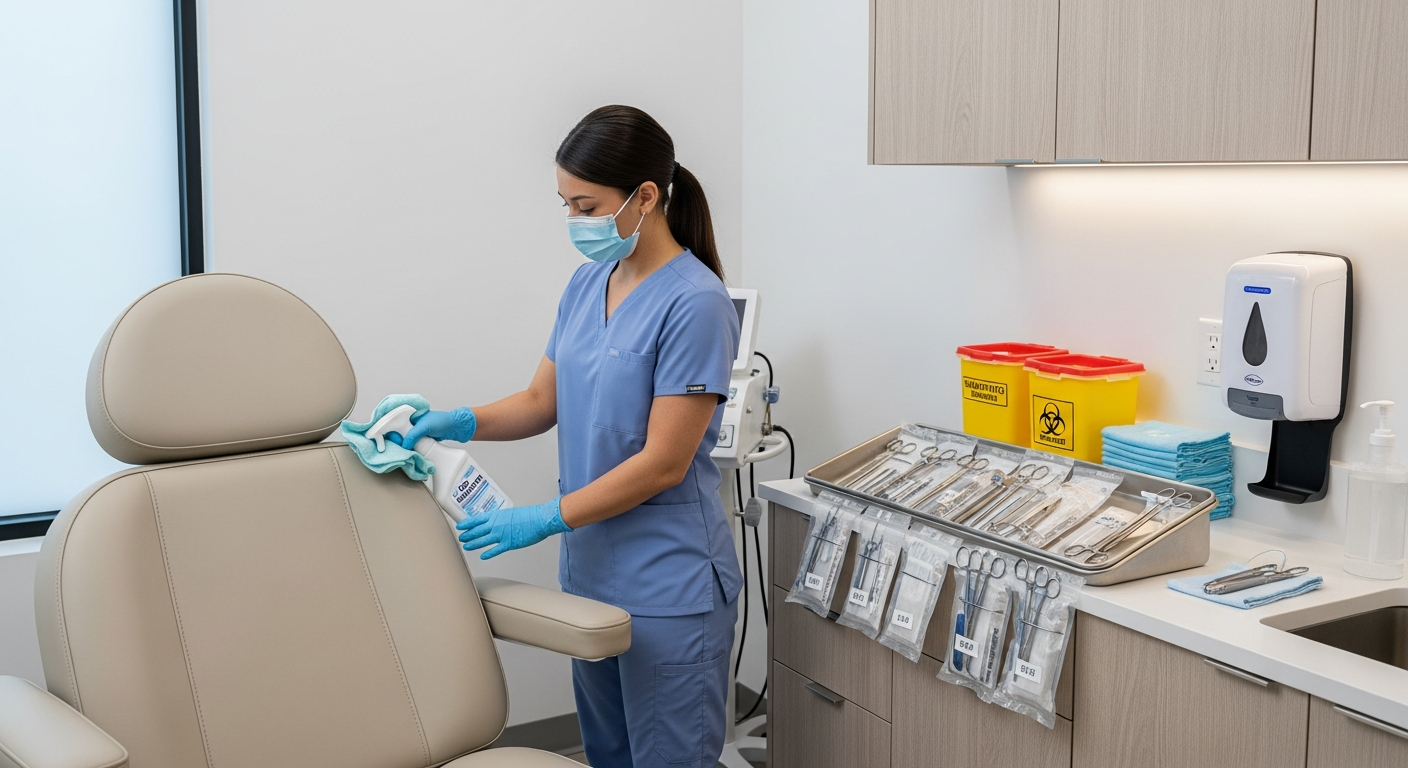
Every treatment room must undergo a comprehensive disinfection cycle between every appointment. This systematic approach ensures that the environment remains clinical and free from lingering pathogens or debris.
High-Touch Surface Decontamination
Staff must use EPA-registered disinfectants to wipe down high-touch surfaces, including treatment tables, stools, and countertops. These chemicals must remain wet on the surface for the full manufacturer-recommended contact time.
Environmental Cleaning Schedules
Beyond individual treatment cycles, the med spa must maintain daily and weekly deep-cleaning schedules for floors and walls. This prevents the accumulation of dust and biological film in areas where clinical procedures occur.
Sterilization Standards for Reusable Tools
Any instrument that penetrates the skin or contacts mucosal membranes must undergo a validated sterilization process. This is the highest level of decontamination and is non-negotiable in a clinical med spa setting.
Autoclave Maintenance and Monitoring
Reusable metal tools must be cleaned and then processed in a calibrated autoclave using heat and pressure. Facilities must perform regular spore testing to verify that the equipment is successfully achieving total sterilization.
Sterile Storage and Handling
Sterilized instruments must remain in sealed, dated pouches until the exact moment of use during a procedure. If a pouch becomes punctured or damp, the contents are no longer considered sterile and must be reprocessed.
Cross-Contamination Prevention Strategies
Cross-contamination occurs when pathogens are transferred from one surface or person to another. Preventing this requires a systematic workflow that separates clean items from soiled materials at all times.
Single-Use Item Management
Items such as needles, gauze, and certain applicators are strictly single-use and must be discarded immediately after a single application. These items are never cleaned or reused, regardless of the treatment type.
Sharps Disposal and Biohazard Safety
All needles and blades must be placed into puncture-resistant sharps containers immediately following use. These containers must be located within reach of the treatment area to minimize the travel of contaminated objects.
- Daily Checklist: Verify all disinfection logs are signed and updated.
- Monthly Audit: Review sterilization records and spore test results.
- Staff Training: Conduct quarterly reviews of updated safety protocols.
