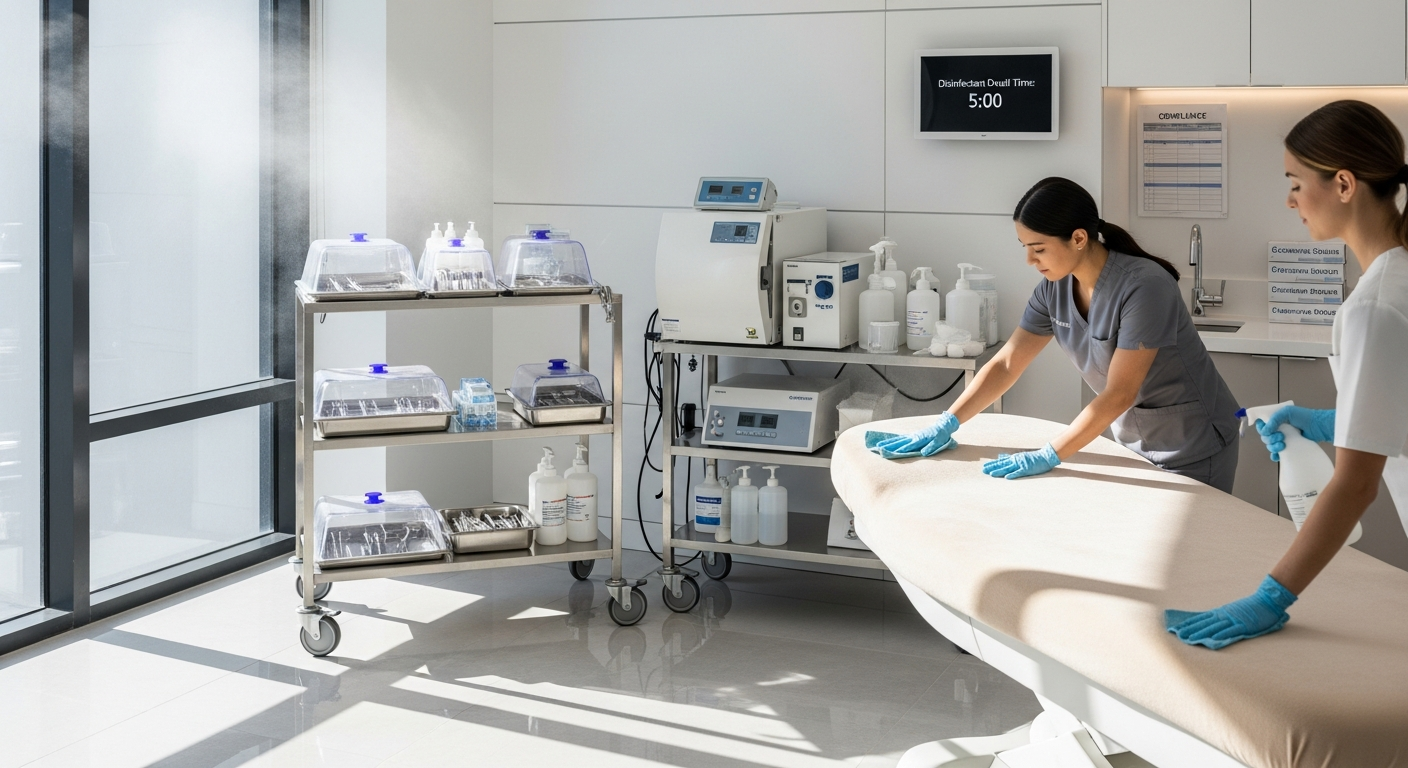
Med Spa Infection Control and Clinical Safety Standards
Med spa infection control is the practice of maintaining clinical hygiene through rigorous sanitation, disinfection, and sterilization protocols to prevent pathogen transmission. These systematic processes include OSHA-compliant surface cleaning, proper sterile tool management, and strict personal protective equipment use to ensure client safety during aesthetic procedures.
Core Med Spa Infection Control Precautions
Standard precautions form the foundation of clinical safety in every aesthetic facility. These protocols assume all body fluids are potentially infectious and require consistent application across every client interaction.
Hand hygiene remains the most effective method for preventing the spread of microorganisms. Practitioners must perform thorough handwashing before and after every treatment using antimicrobial soap and water.
When handwashing is not possible, clinical-grade hand rub should be used. However, visible debris or soil always necessitates a full mechanical wash to maintain the integrity of the treatment environment.
Treatment Room Disinfection Systems
The treatment room environment requires systematic cleaning between every scheduled appointment. This process involves the use of EPA-registered disinfectants that are effective against a broad spectrum of pathogens.
High-Touch Surface Sanitation
Practitioners must identify and disinfect all high-touch surfaces, including treatment tables, stools, and product counters. Any surface touched during a procedure must be saturated with disinfectant for the required contact time.
Contact time, or “dwell time,” is the duration a surface must remain wet to successfully kill bacteria and viruses. Skipping this step compromises the entire med spa infection control system.
Barrier Protection Strategies
Using single-use barriers on equipment helps minimize the risk of cross-contamination. Plastic sleeves or drapes should be applied to touchscreens, handles, and any equipment that cannot be easily saturated with liquid disinfectants.
Barriers must be discarded immediately after the treatment ends. The underlying surface should still be wiped down as a secondary precaution before a new barrier is applied for the next client.
Clinical Instrument Sterilization Systems
Any tool that penetrates the skin or comes into contact with mucosal membranes requires high-level sterilization. This ensures the complete destruction of all microbial life, including highly resistant bacterial spores.
Autoclave Operation and Monitoring
Medical-grade autoclaves use pressurized steam to achieve sterilization of metal instruments. Facilities must follow strict loading patterns to ensure steam reaches every surface of the tools inside the chamber.
Clinical supervisors must implement regular biological monitoring, often called spore testing, to verify autoclave performance. Logs should be maintained to document every sterilization cycle and its successful completion.
Single-Use Item Management
Items designed for one-time use, such as needles, lancets, and certain applicators, must never be reused or reprocessed. These items should be opened in front of the client to demonstrate safety transparency.
Once a single-use item is contaminated, it must be disposed of immediately in the appropriate waste stream. This prevents the accidental reintroduction of used items into the clean treatment field.
Personal Protective Equipment Compliance
Personal Protective Equipment (PPE) acts as a physical barrier between the practitioner and potential infectious agents. The selection of PPE is based on the level of exposure expected during a specific aesthetic treatment.
- Medical-grade gloves: Must be changed between clients and after any contact with non-intact skin.
- Face masks: Protect the respiratory tract from splashes and provide a barrier during close-contact procedures.
- Protective eyewear: Essential during treatments where fluid splatter or flying debris may occur.
Proper donning and doffing sequences are critical to prevent self-contamination. PPE should be removed carefully and disposed of in designated bins before the practitioner leaves the treatment room.
Waste Management and Sharps Disposal
Effective med spa infection control requires a specialized approach to waste management. Biohazardous waste and sharps require dedicated containers that are puncture-resistant and leak-proof.
Sharps containers must be placed as close as possible to the point of use. This minimizes the distance a practitioner must travel with an exposed needle, reducing the risk of accidental needle-stick injuries.
All biohazardous waste must be collected by certified disposal services in accordance with local and federal regulations. Proper labeling and storage of this waste ensure the safety of both the clinical staff and the public.
