Essential Med Spa Regulations and Compliance Standards
Med spa regulations are state-specific legal frameworks governing the operation of medical aesthetic clinics, including requirements for physician supervision, licensing, and professional ownership. Most states mandate that medical spas operate as medical practices under a licensed physician or through a Professional Corporation to ensure patient safety and clinical oversight.
Understanding State-Specific Med Spa Regulations
Med spa regulations vary significantly across the United States because they are governed by individual state boards of medicine and nursing. Every facility must align its operations with the specific statutes of the state where it conducts business.
A primary legal consideration is the Corporate Practice of Medicine (CPOM) doctrine, which exists in many states. This doctrine generally prohibits non-physicians from owning a medical practice or employing physicians to provide medical services.
In states with strict CPOM rules, med spa owners often utilize a Management Services Organization (MSO) model. This structure allows a business entity to handle administrative tasks while a professional corporation manages the clinical side.
Licensing and Medical Supervision Requirements
The core of med spa compliance involves establishing clear lines of medical supervision. Since most aesthetic treatments are considered medical procedures, they require a licensed practitioner to oversee patient care and safety protocols.
Role of the Medical Director
A medical director is typically a licensed physician responsible for the clinical integrity of the facility. They must provide appropriate supervision to nurses, physician assistants, and aestheticians performing medical-grade treatments.
State laws define whether a medical director must be physically on-site or available via telecommunication. Failing to meet these specific supervision standards can lead to charges of practicing medicine without a license.
Scope of Practice for Aesthetic Providers
Every staff member must operate within their legal scope of practice as defined by their professional license. For example, a registered nurse may perform certain laser treatments that a licensed aesthetician cannot.
Compliance requires verifying the credentials of all providers and ensuring they have received documented training. Performing procedures outside of one’s legal scope is a frequent cause of regulatory inspections and disciplinary actions.
Inspection Readiness and Documentation Basics
Regulatory bodies and state boards may conduct inspections to ensure facilities meet safety and hygiene standards. Maintaining a constant state of readiness is essential for long-term operational legal health.
Patient Charting and Consent Forms
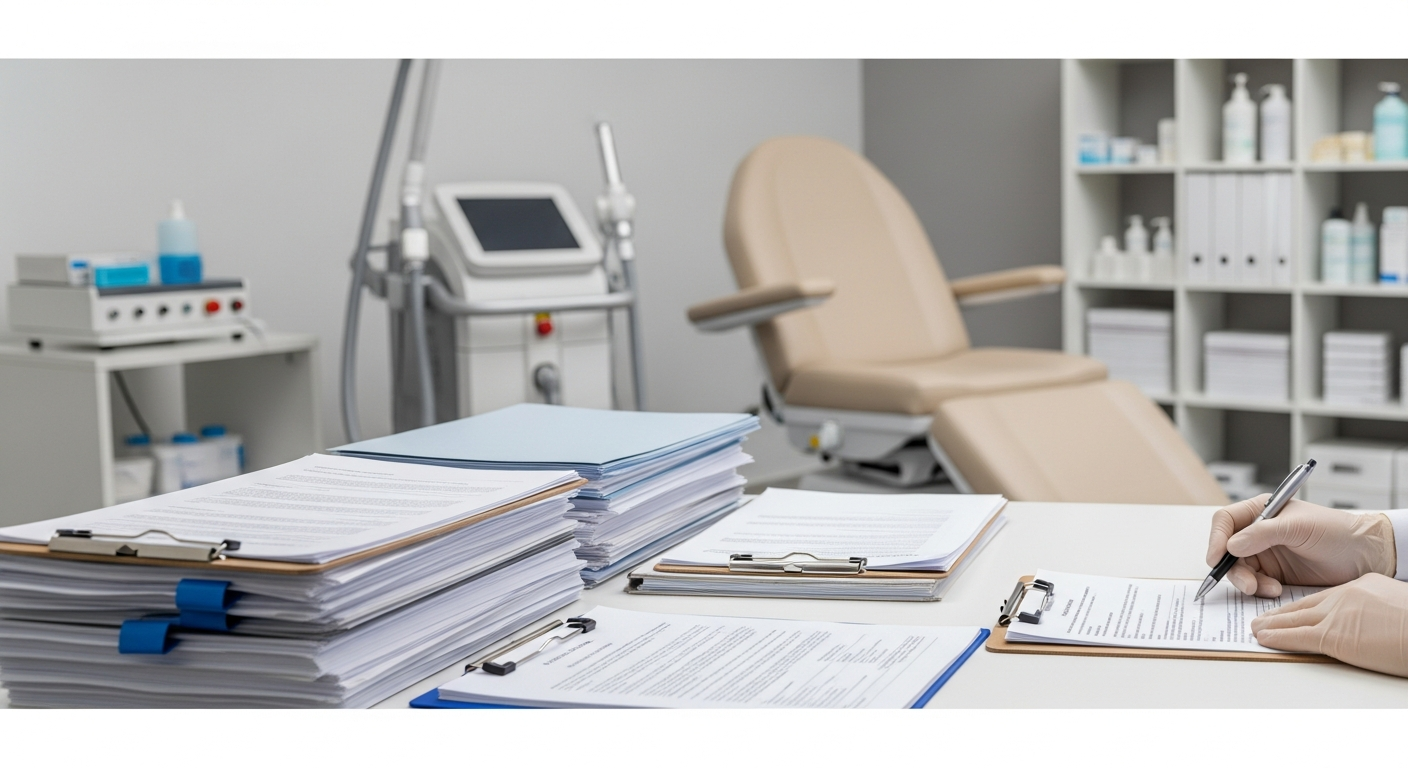
Accurate medical record-keeping is a fundamental requirement of med spa regulations. Every patient must undergo a “good faith examination” by a qualified provider before receiving medical treatments for the first time.
Documentation must include detailed treatment notes, informed consent forms signed by the patient, and discharge instructions. These records serve as the primary defense during a clinical audit or legal dispute.
Standard Operating Procedures (SOPs)
Clinics must maintain written Standard Operating Procedures (SOPs) that outline the protocols for every medical service offered. These documents should be reviewed and signed annually by the medical director.
Proper SOPs include emergency protocols, sterilization techniques, and incident reporting guidelines. Having these documents organized and accessible demonstrates a commitment to regulatory compliance and patient safety.
