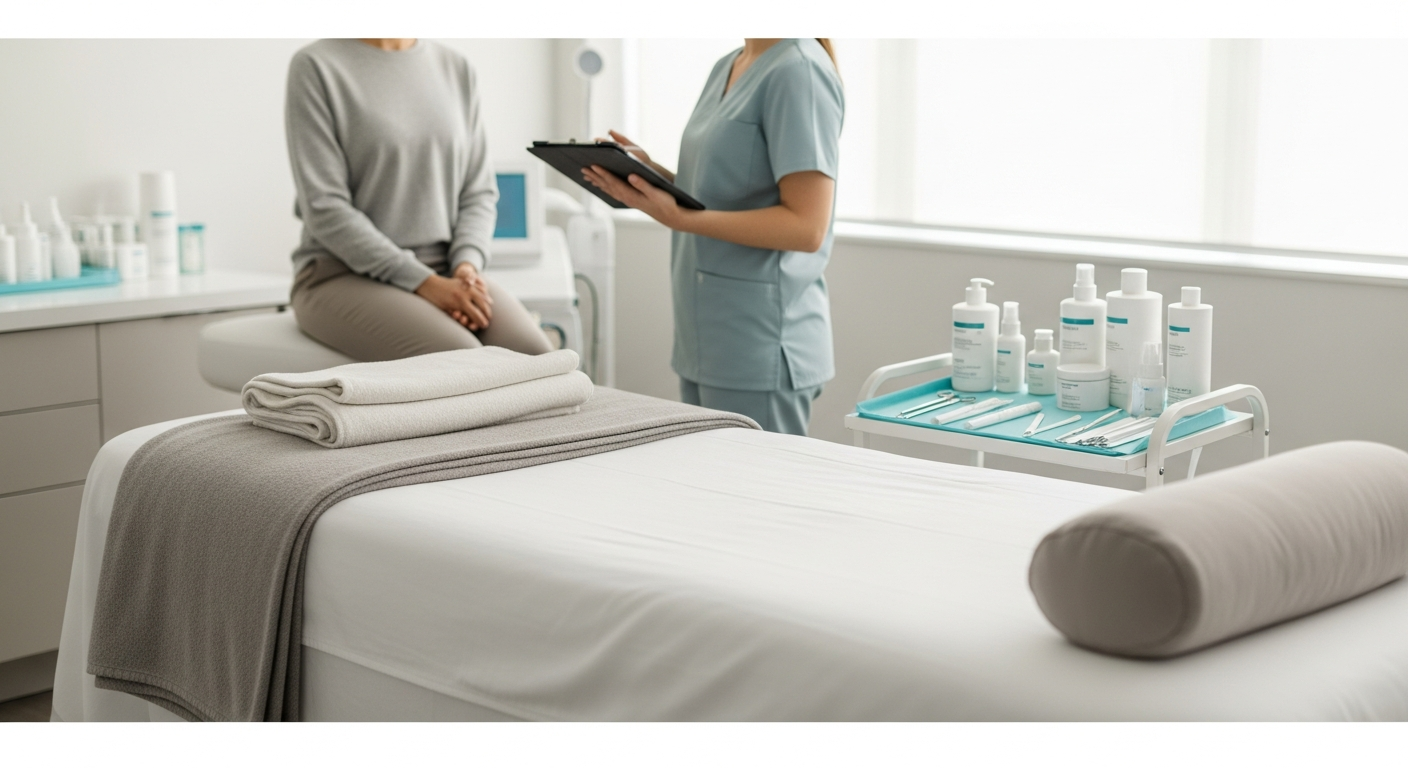
Post-Treatment Management in Med Spa
Post-treatment management in med spa environments is the application of standardized clinical protocols designed to monitor recovery and minimize complications following aesthetic procedures. These systems prioritize consistent workflows for managing inflammation, erythema, and tissue repair to ensure predictable healing across all patient demographics and treatment modalities.
Standardizing Post-Laser Recovery Protocols
Laser treatments rely on controlled thermal injury to achieve clinical results.
Effective management requires immediate cooling to dissipate residual heat and prevent prolonged erythema.
Clinicians must implement standardized cooling durations and barrier protection schedules for every patient.
Post-laser workflows should focus on heat management and transepidermal water loss.
Standardized systems ensure that patients receive identical instructions regarding sun avoidance and physical activity.
Consistency in these protocols reduces the risk of post-inflammatory hyperpigmentation in laser patients.
Managing Erythema and Edema
Inflammation is a natural response to laser-induced thermal stress.
Med spas must establish thresholds for acceptable redness versus clinical adverse events.
Standardized assessment scales help providers determine when intervention or modified cooling is necessary.
Microneedling Downtime Management
Microneedling creates thousands of micro-channels that remain open for several hours.
Post-treatment management in med spa settings focuses on maintaining a sterile environment.
Standardized protocols dictate exactly when a patient may resume topical applications or makeup use.
Managing the initial 24-hour inflammatory window is critical for microneedling success.
Providers should follow a fixed schedule for assessing pinpoint bleeding and swelling.
This approach removes individual guesswork and ensures patient safety during the channel-closing phase.
Chemical Peel Aftercare Systems
Chemical peels involve a controlled chemical exfoliation of the epidermis or dermis.
Management systems must account for the specific depth of the peel administered.
Standardized workflows guide patients through the expected phases of desquamation and erythema.
Providers should utilize pre-printed clinical guides that outline the “peeling window.”
These systems prevent patients from prematurely exfoliating or picking at the skin.
Uniform aftercare instructions ensure that the new skin barrier remains protected from environmental stressors.
Monitoring Barrier Repair
The primary goal after a chemical peel is the restoration of the skin barrier.
Clinical protocols should emphasize hydration and occlusive protection during the first 72 hours.
Consistent monitoring allows supervisors to verify that healing is progressing at the expected rate.
Standardized Recovery Workflows
Clinical excellence in a med spa relies on protocol consistency over individual provider judgment.
Every procedure must conclude with a documented post-treatment briefing.
This ensures that every patient receives the same high standard of clinical oversight.
- Universal Instructions: Standardized print and digital guides for all recovery phases.
- Follow-up Documentation: Scheduled check-ins to monitor for delayed adverse reactions.
- Erythema Assessment: Visual benchmarks to distinguish normal healing from complications.
- Activity Restrictions: Clear, non-negotiable timelines for physical exertion and heat exposure.
By implementing these systems, med spas reduce the incidence of preventable post-procedure issues.
Structured workflows provide clinical supervisors with a framework for auditing treatment outcomes.
This professional approach elevates the safety standards of the entire aesthetic practice.
