Med Spa Infection Control and Clinical Safety Standards
Med spa infection control is a systematic approach to preventing the spread of pathogens through rigorous sanitation, sterilization, and personal protective equipment protocols. These clinical safety standards ensure that treatment rooms, equipment, and practitioner hand hygiene meet OSHA-aligned requirements to protect both clients and staff during aesthetic procedures.
OSHA-Aligned Sanitation in the Med Spa Environment
Maintaining compliance with federal safety standards requires a written exposure control plan specific to the med spa setting. This plan outlines the necessary steps for managing bloodborne pathogens and environmental hazards found in aesthetic clinics.
Standard precautions must be applied to every client to ensure a baseline of safety. This universal approach treats all bodily fluids and non-intact skin as potentially infectious, requiring consistent use of protective barriers.
Treatment Room Disinfection Systems
Effective infection control requires a clear distinction between cleaning and disinfecting surfaces. Cleaning removes visible soil and debris, while disinfection utilizes registered chemicals to eliminate microscopic pathogens on non-porous surfaces.
High-Touch Surface Management
Clinical staff must disinfect high-touch areas between every client appointment. These surfaces include treatment tables, adjustable operator stools, product counters, and any equipment interfaces used during the session.
EPA-registered disinfectants must remain wet on the surface for the full contact time specified by the manufacturer. This “dwell time” is essential for the chemical to successfully neutralize bacteria, viruses, and fungi.
Sterilization Standards for Reusable Tools
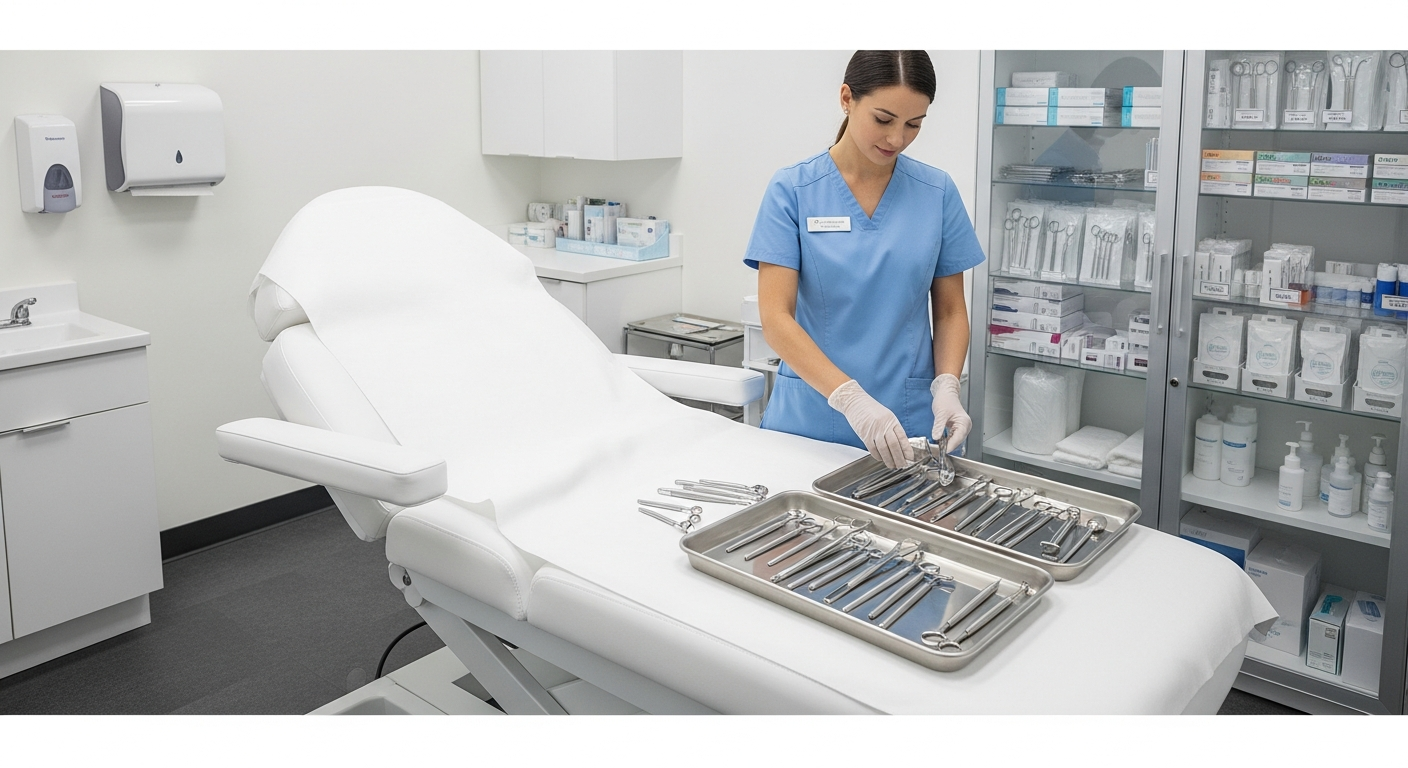
Any instrument that contacts mucosal membranes or performs skin penetration must undergo professional-grade sterilization. Pressurized steam sterilization is the gold standard for ensuring all microbial life is destroyed on reusable tools.
Clinics must maintain detailed sterilization logs for every cycle, recording the date, time, and biological indicator results. This documentation provides a verifiable trail of equipment safety and regulatory compliance.
Cross-Contamination Prevention Strategies
Preventing the transfer of microorganisms requires strict organization within the clinical zone. Practitioners should prepare all necessary disposables and products before a treatment starts to avoid touching clean storage areas during the procedure.
Personal Protective Equipment (PPE) Protocols
The selection of PPE depends on the specific aesthetic treatment and the potential for fluid exposure. Standard med spa PPE includes single-use medical gloves, face masks, and protective eyewear when splashing is possible.
Gloves must be replaced immediately if they are punctured or if the practitioner touches a contaminated surface. Hand hygiene should be performed both immediately before donning gloves and after their removal.
Staff Compliance and Safety Oversight
Systematic safety relies on ongoing education for all clinical personnel. Med spa owners should provide initial safety training during onboarding and conduct annual refresher courses to stay current with evolving sanitation techniques.
Clinical supervisors should perform regular safety audits to identify and correct gaps in daily sanitation routines. Consistent monitoring ensures that infection control remains a primary focus of the facility’s daily operations.
