Med Spa Infection Control and Clinical Safety Standards
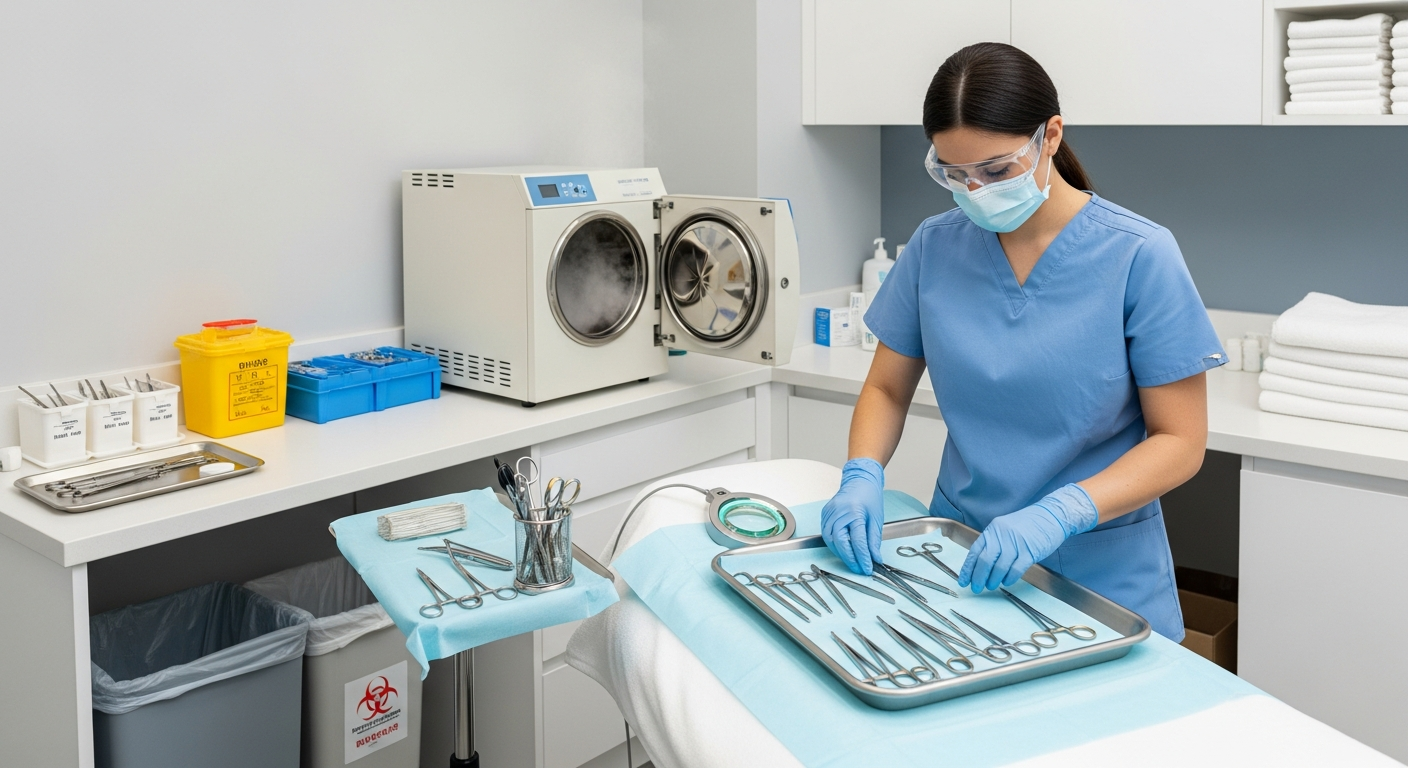
Med spa infection control is a systematic set of protocols designed to prevent the spread of pathogens through rigorous sanitation, sterilization, and personal protective equipment. These OSHA-aligned practices ensure patient safety by maintaining treatment room disinfection and preventing cross-contamination between procedures such as injections, laser treatments, and advanced clinical skincare services.
OSHA-Aligned Sanitation in the Med Spa Environment
Adhering to federal safety standards is mandatory for any facility performing minimally invasive procedures. Med spa owners must implement a written exposure control plan to protect both staff and clients.
This plan focuses on bloodborne pathogen standards and universal precautions. Every treatment room must be equipped with accessible sharps containers and biohazard disposal systems to manage clinical waste.
Staff must be trained on the proper selection and use of personal protective equipment (PPE). This includes high-grade gloves, masks, and eye protection tailored to specific aesthetic treatments.
Treatment Room Disinfection Systems
Maintaining a sterile environment requires a two-step process of cleaning and disinfecting. Cleaning removes visible debris, while disinfection targets microscopic pathogens on non-porous surfaces.
High-touch areas such as treatment tables, magnifying lamps, and product counters require disinfection between every client. Use only EPA-registered, hospital-grade disinfectants for these surfaces.
All linens must be changed after every session and laundered at high temperatures. Alternatively, disposable barriers can be used to provide a fresh, sanitary surface for each patient.
Clinical Sterilization Standards
Reusable implements used in med spa treatments must undergo rigorous sterilization to eliminate all microbial life. This is typically achieved through the use of an onsite autoclave.
Sterilization protocols include:
- Thoroughly cleaning tools to remove organic matter.
- Placing implements in indicator pouches to verify heat exposure.
- Running a full cycle in a calibrated steam autoclave.
- Storing sterilized tools in a dry, dust-free environment until use.
Single-use items must never be cleaned or reused. Immediate disposal of lancets, needles, and single-use applicators is essential to prevent the risk of infection.
Cross-Contamination Prevention Strategies
Cross-contamination occurs when pathogens are transferred between surfaces, staff, and clients. Strict hand hygiene is the most effective way to break this chain of transmission.
Clinical providers must perform hand hygiene before gloving and immediately after glove removal. This practice protects the integrity of the clinical field during aesthetic injections and skin treatments.
Barrier films should be applied to equipment controls and touchpoints that are difficult to disinfect. These films are discarded and replaced after each treatment session to ensure a clean workspace.
Documentation and Safety Audits
Consistency in med spa infection control is maintained through detailed logs and regular safety audits. Compliance managers should review sterilization logs and expiration dates weekly.
Maintaining these records ensures that the facility meets state board requirements and federal safety guidelines. A culture of safety protects the reputation of the med spa and the health of the community.
