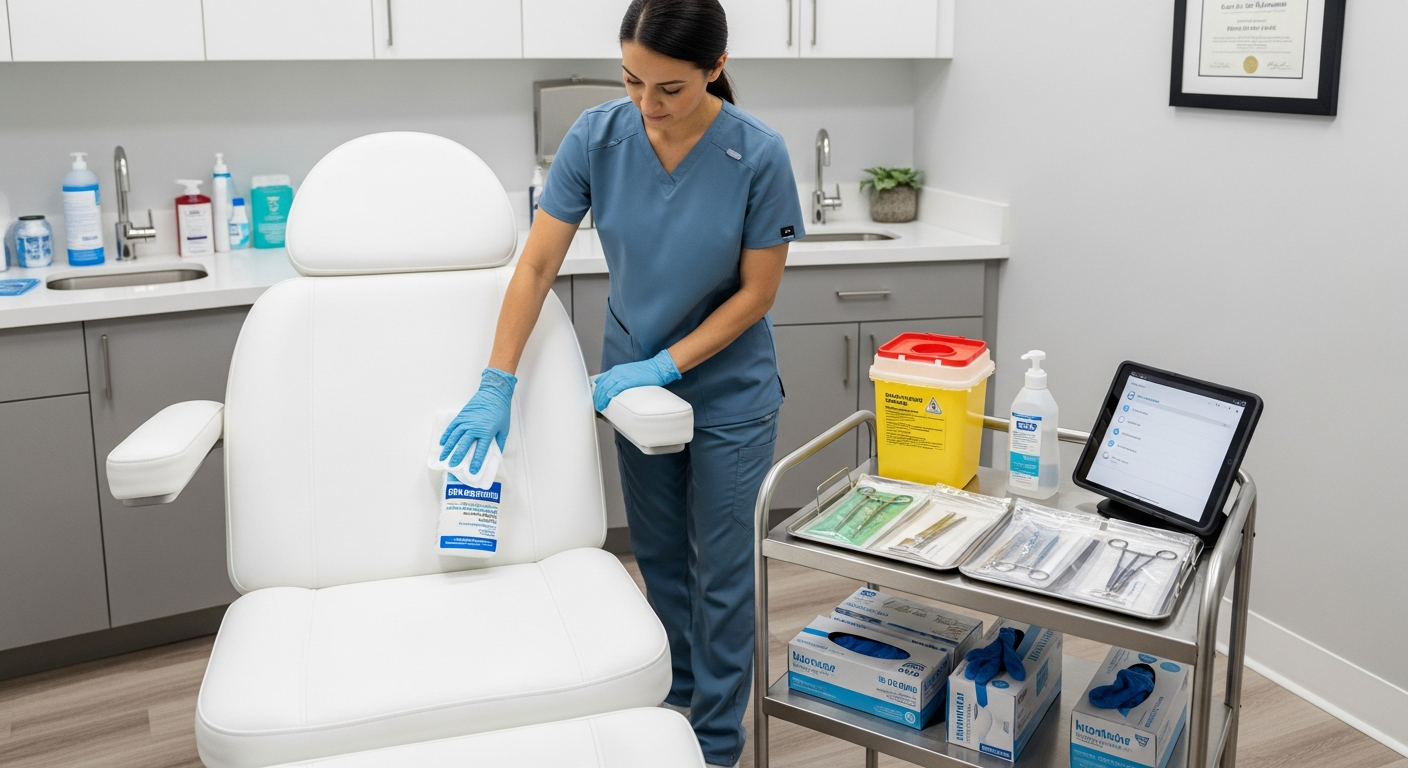
Med Spa Infection Control and Clinical Safety Standards
Med spa infection control refers to the systematic application of sanitation, disinfection, and sterilization protocols designed to prevent pathogen transmission in aesthetic environments. These practices include OSHA-aligned bloodborne pathogen standards, rigorous treatment room decontamination, and the use of EPA-registered disinfectants to maintain a sterile clinical setting for both clients and practitioners.
Core Pillars of Med Spa Infection Control
Effective safety systems begin with standardized hand hygiene. Practitioners must use antimicrobial soap or high-alcohol rubs before and after every client contact.
Personal Protective Equipment (PPE) serves as a critical barrier. Med spa staff must utilize gloves, masks, and eye protection based on the specific treatment risk.
Establishing a written exposure control plan ensures compliance with federal regulations. This document outlines exactly how the facility manages potential biohazards and sharps.
OSHA Compliance and Bloodborne Pathogens
Med spas must strictly follow OSHA standards regarding bloodborne pathogens. This includes the immediate disposal of needles in puncture-resistant sharps containers.
Staff training is mandatory for all employees with potential exposure. Annual updates ensure the clinical team understands the latest safety maneuvers and reporting steps.
Safety Data Sheets (SDS) for every chemical used must be accessible. This ensures staff can quickly reference first aid and handling instructions during an accident.
Treatment Room Disinfection Systems
Room turnover protocols must be executed after every single appointment. This involves removing all soiled linens and clearing all used disposables from the area.
Environmental surfaces require treatment with EPA-registered, hospital-grade disinfectants. The solution must remain wet on the surface for the full manufacturer-recommended contact time.
Electronic equipment and device screens need specialized care. Use barrier films or approved wipes to prevent moisture damage while ensuring complete decontamination.
High-Touch Surface Protocols
Focus on high-touch zones like treatment tables, stools, and countertops. These areas harbor the highest concentration of bacteria and require frequent mechanical cleaning.
Light switches, door handles, and magnifying lamps are often overlooked. Incorporating these into a daily checklist prevents them from becoming vectors for cross-contamination.
Flooring in treatment areas should be non-porous and cleaned daily. This prevents the buildup of dust, debris, and spilled clinical products in the room.
Sterilization and Instrument Processing
Reusable tools must undergo a multi-step cleaning process before sterilization. This involves manual scrubbing or ultrasonic cleaning to remove all visible organic debris.
Autoclaves are the standard for achieving total sterilization in a med spa. Regular biological monitoring, such as spore testing, confirms the equipment is functioning correctly.
Sterilized items must remain in sealed pouches until the moment of use. If a package is punctured or wet, the contents are no longer considered sterile.
Single-Use vs. Reusable Equipment
Single-use items like cotton swabs, gauze, and wooden spatulas must be discarded immediately. Never attempt to clean or reuse items labeled for one-time use.
Proper inventory management prevents the accidental reuse of disposables. Store sterile supplies in closed cabinets away from sinks or potential splash zones.
Clearly separating “clean” and “dirty” work zones prevents accidents. Use designated trays for contaminated tools to keep them away from sterile setup areas.
Cross-Contamination Prevention Strategies
Avoid touching clean supply containers with contaminated gloves. Utilize “no-touch” dispensing methods or use a clean tool to extract products from jars.
Implement a strict “one needle, one syringe, one time” policy. This is the foundation of injection safety and prevents the spread of bloodborne illnesses.
Regular safety audits help identify gaps in the infection control chain. Observation of staff techniques ensures that theoretical protocols are followed in daily practice.
