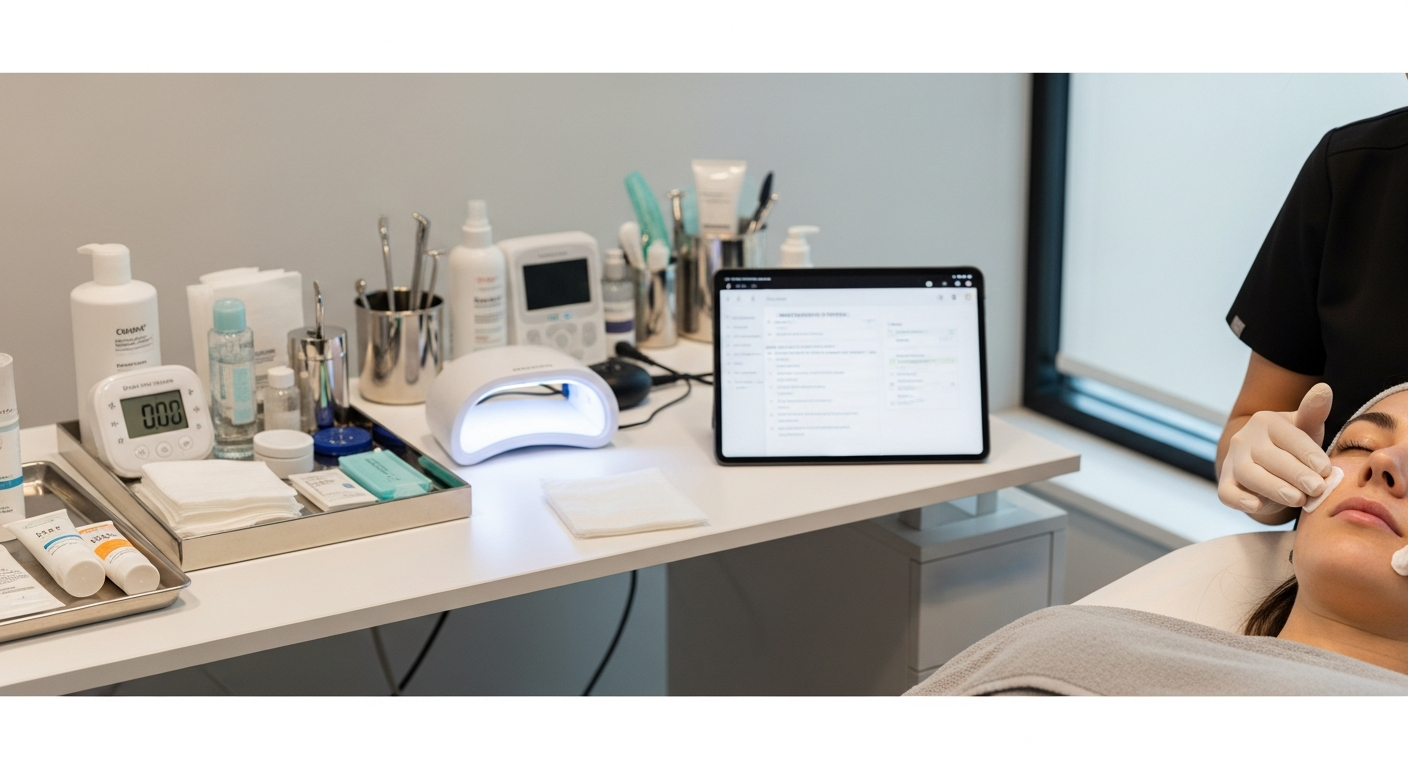
Clinical Post-Treatment Management in Med Spas
Post-treatment management in med spa environments is the implementation of standardized clinical protocols designed to oversee patient recovery and mitigate side effects after aesthetic procedures. These structured systems stabilize the skin barrier, manage inflammation, and ensure consistent healing outcomes across all laser, microneedling, and chemical peel treatments within a medical aesthetic facility.
Post-Laser Recovery Protocol Systems
Laser treatments require precise management of thermal energy retained in the dermis.
Standardized protocols focus on heat dissipation and immediate barrier protection.
Clinicians must monitor for prolonged heat sensation and implement cooling measures.
Post-laser workflows prioritize the application of non-comedogenic occlusives.
These agents prevent transepidermal water loss while the epidermis regenerates.
Strict adherence to sun avoidance is mandatory to prevent post-inflammatory hyperpigmentation.
Microneedling Downtime Management
Microneedling creates thousands of controlled micro-channels that require specific care.
Post-treatment management involves keeping these channels free from environmental contaminants.
Initial recovery focuses on soothing the skin and reducing immediate edema.
Providers must ensure patients use only sterile, bland topicals for the first 24 hours.
Standardized systems include specific instructions for gentle cleansing without mechanical friction.
Consistency in these protocols prevents secondary infections and ensures rapid closure of the skin barrier.
Chemical Peel Aftercare Frameworks
Chemical peels involve controlled injury to the skin layers to stimulate cellular turnover.
Clinical management focuses on controlling the desquamation process without premature peeling.
Maintaining a balanced pH and high hydration levels is essential during the shedding phase.
Standardized workflows dictate the timing of reintroduced active ingredients.
Premature use of retinoids or acids can cause significant irritation or scarring.
Med spa protocols should emphasize patient compliance with moisturizing schedules.
Managing Inflammation and Erythema
Clinical Assessment of Redness
Erythema is a common and expected response to most energy-based and ablative treatments.
Management involves distinguishing between therapeutic inflammation and adverse reactions.
Standardized cooling protocols are used to mitigate excessive discomfort and swelling.
Edema Mitigation Strategies
Post-procedure edema is managed through elevation and occasionally cold compresses.
Clinical systems should define the acceptable duration of swelling for each treatment type.
Providers must provide clear timelines to patients to manage expectations regarding downtime.
Standardized Recovery Workflows in Med Spas
Relying on individual provider judgment can lead to inconsistent patient outcomes.
Med spas must implement written recovery manuals for every procedure offered.
These manuals ensure every patient receives the same high standard of clinical care.
- Digital Documentation: Log all post-treatment symptoms and photos.
- Communication Logs: Standardize follow-up calls at 24 and 72 hours.
- Emergency Escalation: Define clear triggers for clinical supervisor intervention.
Uniformity in post-treatment management reduces the risk of long-term complications.
It also simplifies the training process for new aesthetic providers entering the practice.
A structured environment ensures the safety and satisfaction of all clinical patients.
