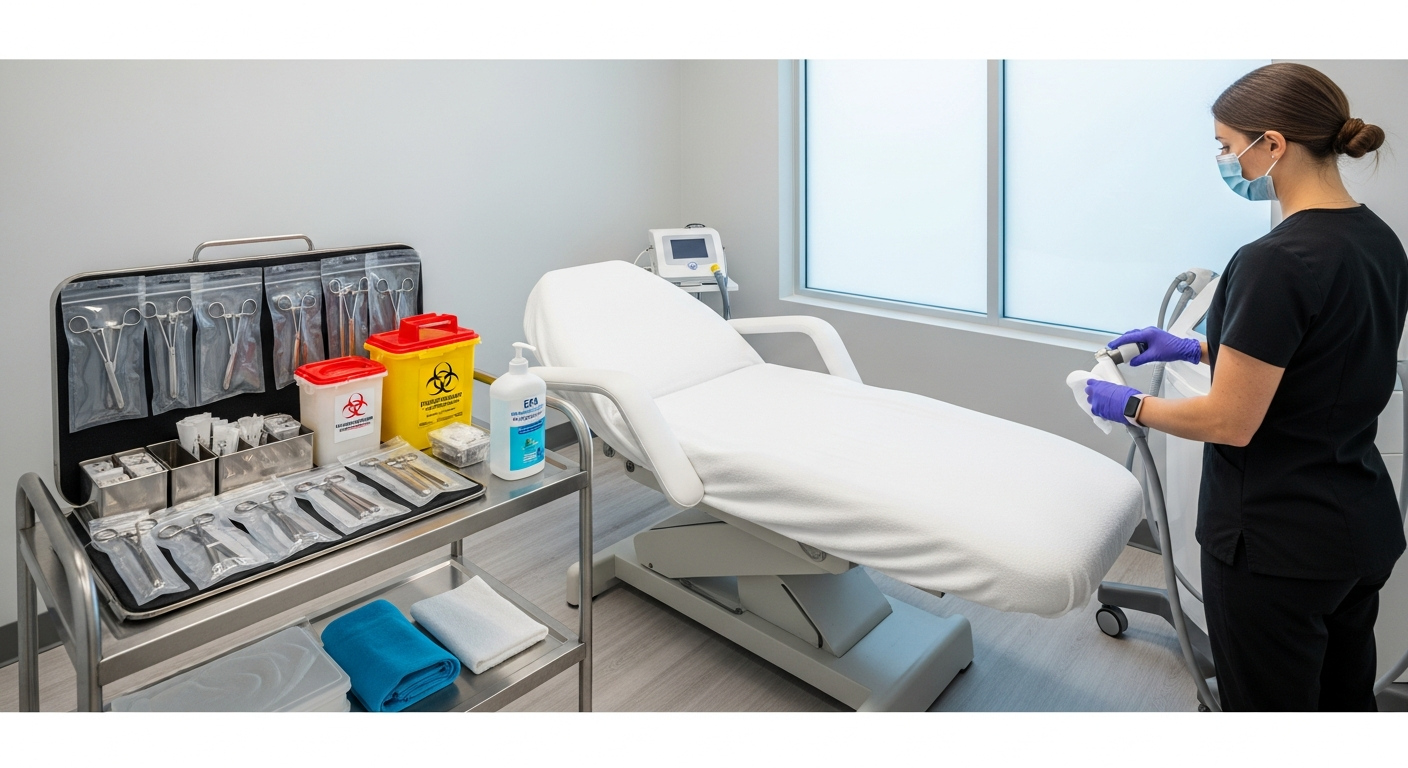
Med Spa Infection Control and Clinical Safety
Med spa infection control is a set of rigorous sanitation and sterilization protocols used to prevent the spread of pathogens in aesthetic clinics. These OSHA-aligned practices involve disinfecting treatment surfaces, managing clinical waste, and ensuring all reusable tools meet strict sterilization standards to maintain a safe environment for practitioners and clients.
OSHA-Aligned Sanitation Practices
Adhering to OSHA standards is foundational for any med spa.
This includes maintaining a written exposure control plan.
Staff must be trained in handling bloodborne pathogens effectively.
Safety Data Sheets (SDS) must be accessible for all chemicals.
Every practitioner must understand the proper dilution ratios.
Consistent documentation ensures compliance during clinical inspections.
Treatment Room Disinfection Systems
Each treatment room requires a systematic cleaning approach.
High-touch surfaces, such as aesthetic beds and trays, need disinfection.
This process must occur before and after every client session.
Use intermediate-level, EPA-registered disinfectants for hard surfaces.
Allow for the required contact time specified on the label.
Ensure all porous materials are replaced between every treatment.
Surface Preparation Protocols
Remove all visible debris before applying liquid disinfectants.
Wipe down equipment controls and adjustment handles thoroughly.
Keep clean supplies stored in closed cabinets to prevent settling dust.
Sterilization Standards for Reusable Tools
Tools that penetrate the skin or touch mucous membranes require sterilization.
Use a validated autoclave system for all multi-use metal instruments.
Maintain detailed logs of every sterilization cycle performed.
Biological indicators should be used weekly to verify equipment function.
Pouches must remain sealed until the point of clinical use.
Check chemical integrators on every pack to ensure heat penetration.
Cross-Contamination Prevention
Preventing the transfer of bacteria requires strict operational flow.
Designate specific “clean” and “dirty” zones within the facility.
Never move used instruments into areas where sterile supplies are stored.
Hand Hygiene Protocols
Hand washing is the most effective way to stop pathogen spread.
Wash hands thoroughly before donning and after removing gloves.
Use dedicated hand-washing sinks that are separate from tool cleaning areas.
Personal Protective Equipment (PPE)
Practitioners must use appropriate PPE for every aesthetic procedure.
This includes disposable gloves, face masks, and protective eyewear.
Change gloves immediately if they become punctured or heavily soiled.
Clinical Waste Management
Dispose of sharps in puncture-resistant, leak-proof containers.
Sharps containers must be replaced when they reach the fill line.
Follow local regulations for the disposal of biohazardous materials.
Standard trash should be separated from clinical waste.
Use hands-free waste bins to minimize surface contact.
Consistent waste management protects staff and the local environment.
