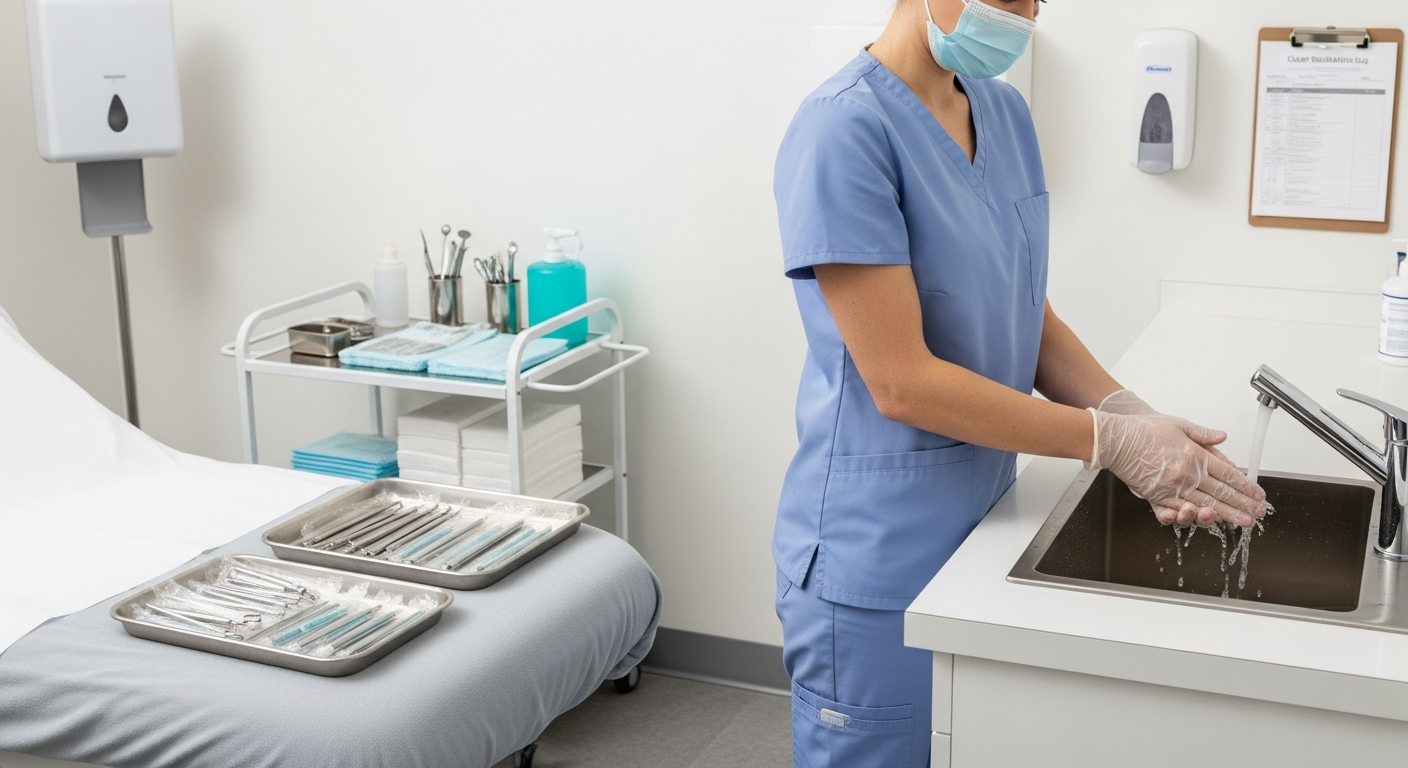
Med Spa Infection Control: Clinical Safety Standards
Med spa infection control refers to the systematic application of sanitation, disinfection, and sterilization protocols designed to prevent the spread of pathogens during aesthetic treatments. These OSHA-aligned practices include rigorous hand hygiene, proper PPE usage, and high-level disinfection of treatment surfaces to protect both practitioners and clients from cross-contamination within the facility.
Standard Precautions and PPE Protocols
Standard precautions form the foundation of med spa safety by treating every client interaction as a potential source of infection. Practitioners must utilize barrier methods to interrupt the transmission of bacteria and viruses during clinical procedures.
Hand Hygiene Compliance
Staff must perform hand hygiene before and after every client contact, following glove removal, and after touching contaminated surfaces. Use of antimicrobial soap or high-alcohol rubs ensures the reduction of transient microorganisms on the skin.
Personal Protective Equipment Usage
Gloves, masks, and eye protection must be selected based on the specific aesthetic treatment being performed. Practitioners must change gloves between every client and immediately if the barrier is compromised during a procedure.
Treatment Room Disinfection Systems
Maintaining a sterile environment requires a two-step process of cleaning and disinfection for all non-porous surfaces. This process eliminates organic debris that could otherwise shield pathogens from the effects of chemical disinfectants.
Environmental Surface Cleaning
Clinical surfaces, including treatment tables, carts, and work counters, must be wiped down with intermediate-level disinfectants between every appointment. These solutions must be EPA-registered for use in clinical settings to ensure efficacy against bloodborne pathogens.
Contact Time and Solution Efficacy
Disinfectants must remain wet on surfaces for the full manufacturer-recommended contact time to achieve the required microbial kill rate. Staff must be trained to recognize the specific “dwell time” required for the various solutions used in the med spa.
Sterilization and Instrument Management
Aesthetic tools that penetrate the skin or contact mucous membranes require the highest level of reprocessing. Proper management of these instruments is critical to preventing the transmission of healthcare-associated infections.
Autoclave Operation and Monitoring
Reusable metal instruments must undergo steam sterilization in an autoclave to ensure all microbial life is destroyed. Facilities must perform regular spore testing and maintain detailed logs of every sterilization cycle to verify equipment performance.
Single-Use Item Disposal
Many med spa supplies, such as needles, lancets, and certain applicators, are designed for one-time use only. These items must be disposed of immediately in puncture-resistant containers to prevent accidental needle sticks and reuse.
Cross-Contamination Prevention Strategies
Cross-contamination occurs when pathogens are transferred from one surface or person to another. Implementing strict workflow patterns within the med spa minimizes the risk of carrying contaminants into clean zones.
Aseptic Technique During Procedures
Practitioners must maintain a sterile field when performing invasive aesthetic treatments. This includes using sterile drapes, avoiding contact with non-sterile surfaces, and ensuring all products are dispensed using a clean-transfer method.
Biohazard Waste Management
Regulated medical waste, including blood-soaked materials and sharps, must be segregated from general trash. Med spas must follow local and federal regulations for the storage, labeling, and removal of biohazardous materials from the treatment area.
Compliance Documentation and Training
A successful infection control program relies on consistent execution and verified documentation. Formal systems must be in place to track safety activities and ensure staff remain current on clinical standards.
Sanitation Logs and Safety Audits
Detailed logs should track the daily cleaning of high-touch areas and the maintenance of sterilization equipment. Regular safety audits allow compliance managers to identify gaps in protocol and implement corrective actions immediately.
Ongoing Staff Education
All med spa employees must receive initial and annual training on bloodborne pathogens and infection control. This education ensures the entire team understands the risks associated with aesthetic procedures and the methods used to mitigate them.
