Med Spa Infection Control: Essential Clinical Standards
Med spa infection control is the systematic application of sanitation, disinfection, and sterilization protocols designed to prevent the spread of pathogens during aesthetic treatments. These clinical safety standards ensure that treatment rooms, equipment, and provider hygiene meet regulatory requirements to protect clients and staff from cross-contamination and healthcare-associated infections.
Standard Operating Procedures for Med Spa Sanitation
Every med spa must maintain a written manual detailing daily sanitation tasks. These procedures outline how to clean high-touch surfaces and manage waste disposal.
Consistent sanitation schedules reduce the environmental bioburden within the facility. Staff must be trained to recognize areas requiring immediate intervention between every client visit.
Documentation of cleaning logs is a core component of clinical compliance. These records provide proof of adherence to safety standards during internal audits or inspections.
Treatment Room Disinfection Systems
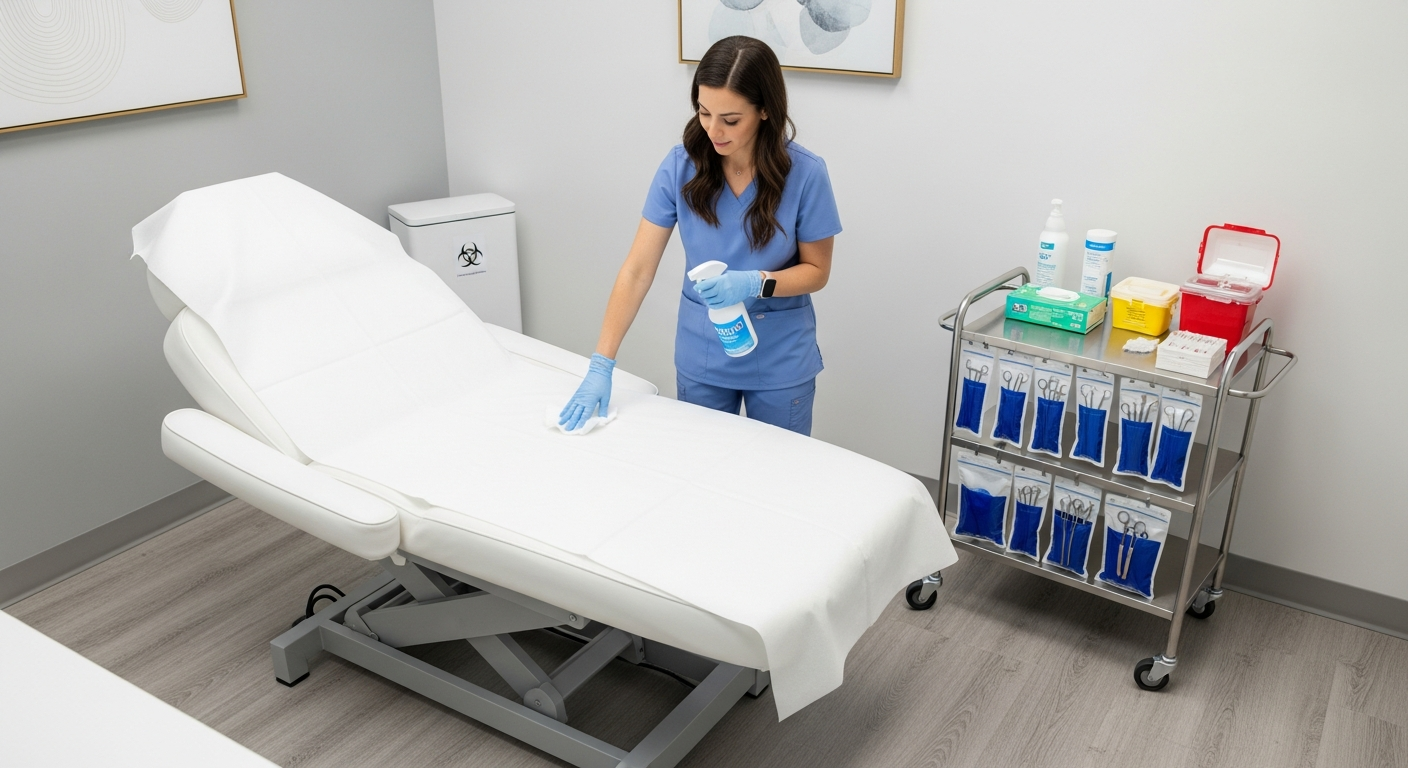
Treatment room surfaces require EPA-registered, hospital-grade disinfectants to eliminate viruses and bacteria. This includes treatment tables, counters, and any stationary equipment used during procedures.
Contact time is critical for effective disinfection in a med spa. Disinfectants must remain wet on the surface for the full duration specified by the manufacturer.
All porous items must be discarded after a single use to prevent pathogen transfer. Non-porous surfaces must be wiped down thoroughly before the next client enters the room.
OSHA-Aligned Sterilization Standards
Reusable tools that penetrate the skin or contact mucous membranes require high-level sterilization. This process uses pressurized steam to achieve a complete kill of all microbial life.
Sterilization equipment must be monitored using chemical and biological indicators. These tests verify that the required temperature and pressure levels were reached during the cycle.
Sterilized instruments must remain in sealed packaging until the moment of use. Any package that is wet, torn, or expired must be treated as contaminated.
Preventing Cross-Contamination in Aesthetic Settings
Cross-contamination occurs when pathogens are moved from one surface or person to another. Implementing a “clean to dirty” workflow minimizes this risk during busy clinical hours.
Proper hand hygiene is the most effective way to stop the spread of infection. Providers must wash hands or use clinical-grade sanitizer before and after every client contact.
Treatment trays should be set up immediately before a procedure begins. This limits the exposure time of sterile tools to the open air in the treatment room.
Personal Protective Equipment and Provider Hygiene
Personal Protective Equipment (PPE) serves as a barrier between the provider and potential infectious materials. This includes the use of medical-grade gloves, masks, and eye protection.
Gloves must be changed between every client and after touching any non-sterile surface. Using the same pair of gloves for multiple tasks is a major safety violation.
Clinical attire should be dedicated to the med spa environment only. Laundered scrubs or protective gowns help maintain a controlled, hygienic space for aesthetic treatments.
