Med Spa Regulations and Compliance Requirements
Med spa regulations are state-specific legal frameworks governing the ownership, supervision, and operation of medical aesthetic practices. These laws typically require a medical director to oversee procedures, define the legal scope of practice for clinicians, and mandate adherence to corporate practice of medicine doctrines and patient safety standards.
The Impact of State-Specific Med Spa Regulations
Every state in the U.S. maintains unique statutes regarding medical aesthetic treatments. These med spa regulations determine which professionals can perform specific procedures and under what level of supervision.
State medical boards and nursing boards provide the primary oversight for these facilities. Compliance depends on understanding how your specific state classifies procedures like neurotoxin injections or laser hair removal.
The Corporate Practice of Medicine Doctrine
Many states enforce the Corporate Practice of Medicine (CPOM) doctrine, which limits med spa ownership. This legal principle generally requires that only licensed physicians or physician-owned corporations own medical practices.
In CPOM states, non-physicians often use a Management Service Organization (MSO) model to handle administrative tasks. This structure ensures the medical director maintains exclusive control over all clinical decisions and patient care.
Licensing and Supervision Requirements
A fundamental aspect of med spa compliance is the relationship between the medical director and the staff. Most med spa regulations mandate that a physician or high-level practitioner provide oversight for all medical acts.
The level of supervision required varies from “on-site” to “immediately available by electronic means.” Failure to meet these specific state standards can lead to charges of practicing medicine without a license.
Role of the Medical Director
The medical director is responsible for establishing protocols and ensuring patient safety. They must verify that every clinician possesses the appropriate state licensure and training for the services they provide.
The director also oversees the “good faith examination,” which is a mandatory initial assessment. This exam must be performed by a qualified provider before a patient undergoes any medical aesthetic treatment.
Legal Scope of Aesthetic Practice
Compliance hinges on clinicians staying within their legally defined scope of practice. Med spa regulations differentiate between the tasks an RN, PA, NP, or esthetician can legally perform.
Estheticians are typically limited to non-invasive treatments that do not penetrate the dermis. Any procedure that affects living tissue, such as deep chemical peels or injections, is considered a medical act.
Delegation of Medical Tasks
Physicians may delegate certain medical tasks to mid-level providers or nurses if state law permits. The delegation must be documented, and the delegatee must be competent to perform the specific procedure safely.
Improper delegation is a common source of regulatory fines and license suspensions. Always reference your state’s medical practice act to confirm which tasks are delegable to specific license types.
Inspection Readiness and Documentation Basics
Maintaining a compliant med spa requires constant readiness for potential state board inspections. This involves keeping detailed records that prove your facility follows all safety and administrative med spa regulations.
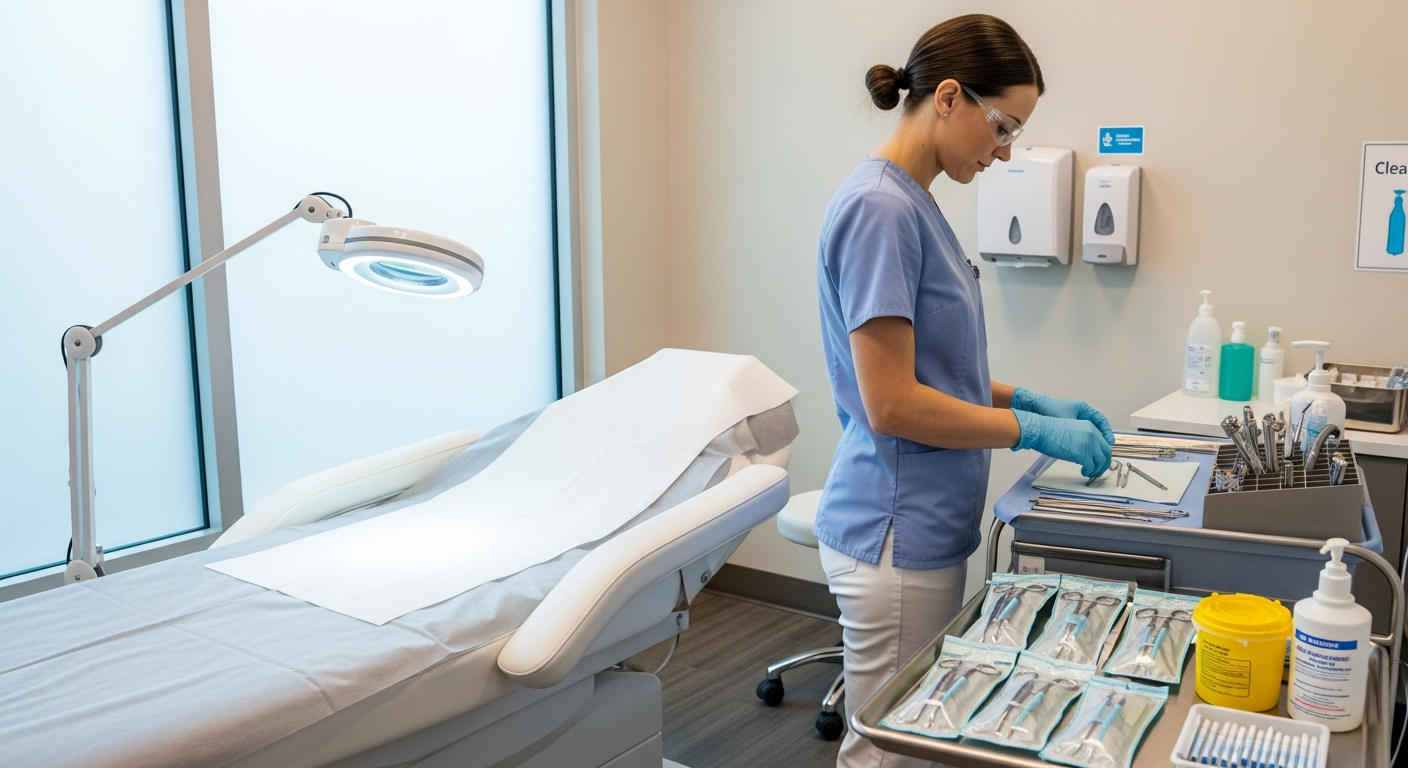
Inspectors often focus on sterilization logs, clinician credentials, and the presence of written protocols. Having an organized compliance binder can significantly reduce the risk of citations during an unannounced visit.
Standard Operating Procedures (SOPs)
Every med spa must have written Standard Operating Procedures approved by the medical director. These documents outline the exact steps for every treatment, from patient intake to post-procedure care.
SOPs should also include emergency protocols for handling adverse events, such as vascular occlusions. Consistent adherence to these procedures demonstrates a commitment to high-level clinical compliance and patient safety.
Mandatory Compliance Records
Documentation is the cornerstone of regulatory defense in the medical aesthetics industry. You must maintain accurate patient charts, informed consent forms, and detailed logs for medical-grade devices.
Ensure that all medical records are stored in a HIPAA-compliant manner to protect patient privacy. Regular internal audits of these records help identify and correct compliance gaps before they become legal liabilities.
