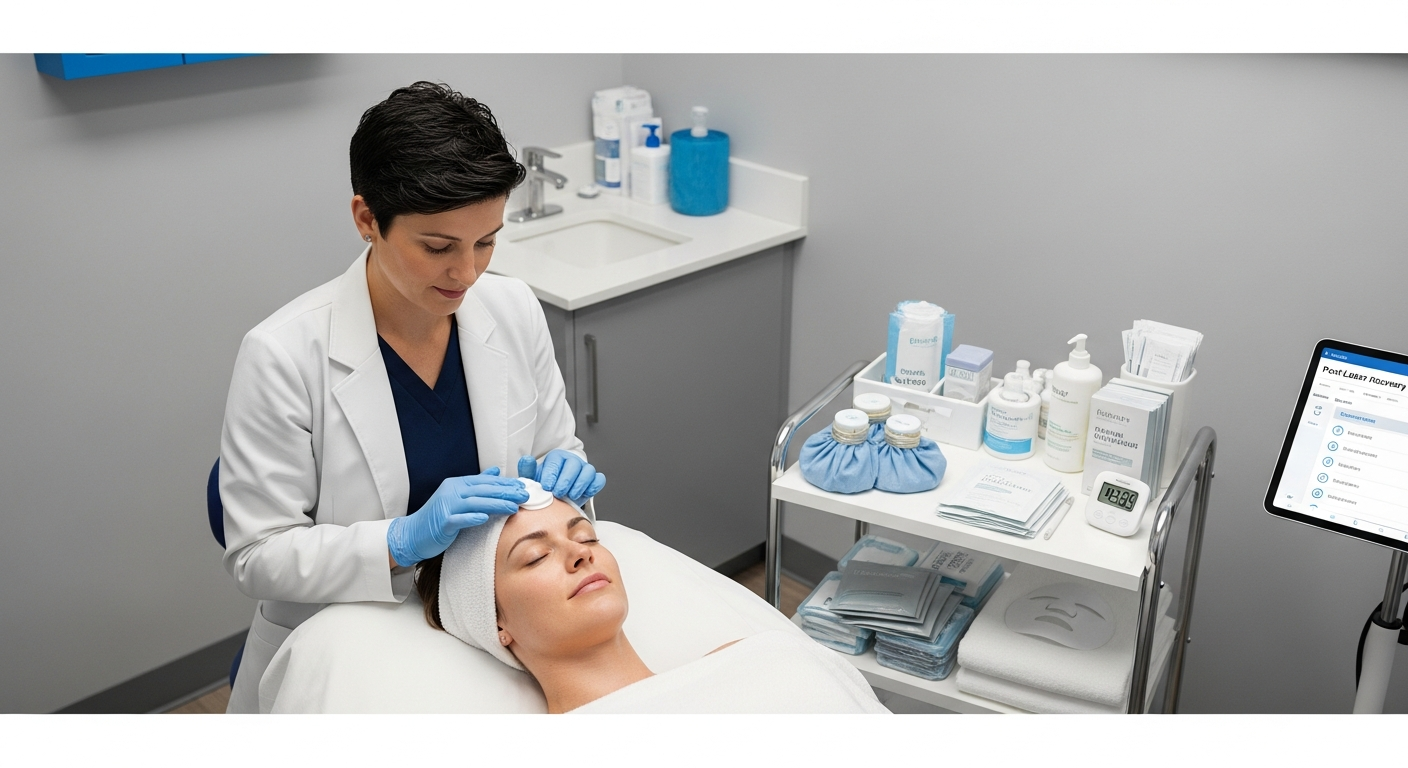
Post-Treatment Management in Med Spa
Post-treatment management in med spa facilities refers to the standardized clinical protocols used to monitor recovery, mitigate side effects, and optimize skin healing after aesthetic procedures. Effective management includes structured workflows for addressing erythema, edema, and downtime following laser therapies, microneedling, and chemical peels to ensure consistent patient outcomes and clinical safety.
Standardizing Post-Laser Recovery Protocols
Post-laser recovery requires immediate intervention to manage thermal energy retained in the dermis.
Clinical protocols must prioritize heat dissipation and the restoration of the skin barrier.
Standardized workflows ensure that every patient receives the same cooling and hydration steps.
Managing Acute Erythema and Edema
Erythema and edema are expected inflammatory responses following most laser resurfacing procedures.
Providers should implement scheduled cooling phases using sterile, chilled compresses to reduce heat.
Consistent monitoring during the first thirty minutes post-procedure is vital for clinical safety.
Long-Term Re-Epithelialization
Managing the skin during the re-epithelialization phase prevents secondary complications like crusting.
Med spas should provide clear, written instructions on using occlusive dressings and gentle cleansers.
Strict adherence to these protocols reduces the risk of post-inflammatory hyperpigmentation in patients.
Microneedling Downtime Management Systems
Microneedling creates controlled micro-injuries that require specific post-treatment management.
The primary goal is to facilitate rapid closure of the micro-channels while preventing infection.
Standardized systems focus on the first twenty-four to forty-eight hours of the recovery window.
Barrier Repair and Environmental Protection
After microneedling, the skin’s natural defense mechanism is temporarily compromised.
Clinical workflows must emphasize the avoidance of active ingredients like retinoids or acids.
Providers should mandate physical sun protection to shield the vulnerable tissue from ultraviolet damage.
Chemical Peel Aftercare and Exfoliation Control
Post-treatment management for chemical peels focuses on the controlled shedding of the epidermis.
Standardization ensures that patients do not manually interfere with the desquamation process.
Med spas must establish protocols that define normal versus abnormal peeling patterns.
Managing Inflammation and Sensitivity
Chemical exfoliants can trigger prolonged sensitivity if the post-care system is inconsistent.
Standardized protocols include the use of non-irritating, lipid-replenishing agents to soothe the skin.
Clinical supervisors must train staff to identify signs of excessive inflammation early in the recovery.
Implementing Standardized Recovery Workflows
Consistency in post-treatment management in med spa environments relies on documented systems.
Every provider should follow the same clinical checklist regardless of their individual experience level.
This systemic approach minimizes human error and ensures predictable healing across the entire practice.
- Standardized Documentation: Recording every step of the post-care application.
- Consistent Patient Education: Using uniform verbal and written instructions.
- Scheduled Follow-ups: Implementing a routine system for checking recovery progress.
- Triage Protocols: Defining clear steps for managing unexpected inflammatory responses.
The Role of Clinical Supervision
Clinical supervisors ensure that all recovery protocols are followed to the letter.
Regular audits of post-treatment records help maintain the high standards of the med spa.
This oversight protects the clinic’s integrity and ensures the highest level of patient care.
