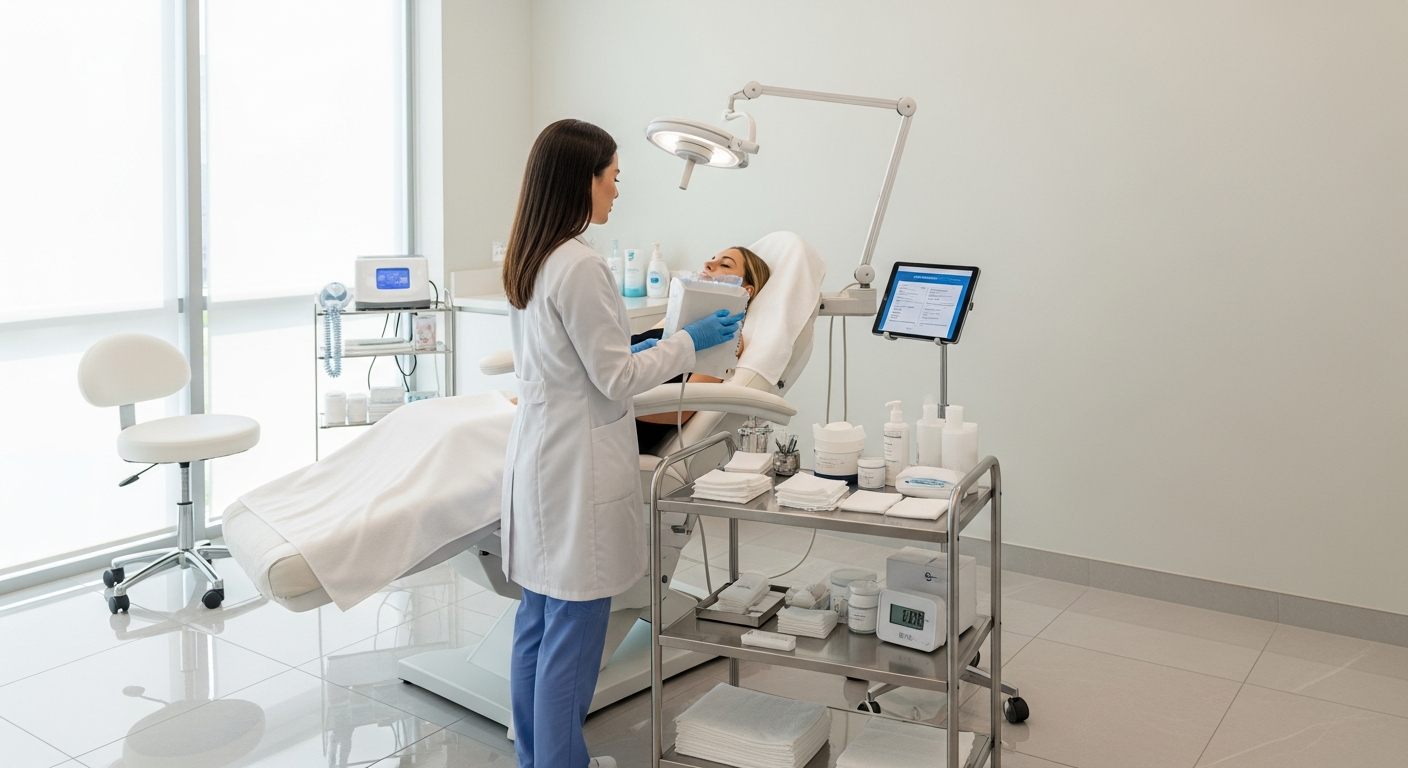
Post-Treatment Management in Med Spa: Clinical Protocols
Post-treatment management in med spa settings refers to the standardized clinical protocols used to oversee patient recovery following aesthetic procedures. These systems involve managing inflammation, erythema, and downtime through consistent workflows. By implementing structured aftercare, med spas ensure uniform safety standards for laser resurfacing, microneedling, and chemical peel procedures across all clinical providers.
Standardized Recovery Workflows for Laser Procedures
Effective post-treatment management in med spa environments begins with controlling thermal energy retained in the dermis. Standardized protocols prioritize immediate heat dissipation to prevent prolonged inflammation.
Clinical supervisors must implement workflows that include specific cooling durations and barrier protection application. This consistency reduces the risk of post-inflammatory hyperpigmentation across diverse patient demographics.
Standardized laser aftercare involves strict photoprotection and hydration schedules. Providers should follow a set timeline for checking skin integrity and monitoring the resolution of expected side effects.
Microneedling Downtime and Barrier Repair
Management of microneedling recovery focuses on the temporary compromise of the skin barrier. Protocols must address the closure of micro-channels to prevent environmental contamination.
Aesthetic providers should utilize standardized recovery systems that emphasize gentle cleansing and non-occlusive hydration. This approach supports natural cellular turnover without inducing irritation.
Downtime management for microneedling typically involves a 24-to-48-hour window of specific activity restrictions. Clear, written instructions ensure patients maintain the clinical integrity of the treatment area at home.
Chemical Peel Aftercare Systems
Post-treatment management for chemical peels requires a structured approach to the exfoliation cycle. Clinical systems should guide patients through the various stages of skin shedding and re-epithelialization.
Standardized peel protocols focus on maintaining pH balance and preventing premature removal of devitalized tissue. This prevents scarring and ensures an even clinical outcome for the patient.
Providers must monitor the depth of the peel and adjust recovery timelines accordingly. Consistency in these systems allows clinical supervisors to track healing benchmarks across the facility.
Managing Post-Procedure Erythema and Inflammation
Erythema is a common physiological response in many med spa procedures. Managing this response involves specific topical interventions designed to soothe the vascular response and reduce swelling.
- Temperature Control: Utilizing cool compresses to reduce localized heat.
- Anti-inflammatory Support: Applying soothing agents to calm the inflammatory cascade.
- Vascular Monitoring: Assessing the duration of redness to ensure it stays within expected limits.
Inflammation management is critical for patient comfort and the prevention of adverse events. Standardized protocols provide clear markers for when erythema exceeds normal clinical expectations.
Operational Benefits of Protocol Consistency
In a professional med spa, protocol consistency is more valuable than individual provider judgment. It ensures that every patient receives a validated level of post-treatment care.
Standardized systems allow for easier identification of complications when they arise. If every provider follows the same recovery steps, clinical supervisors can quickly pinpoint where a deviation occurred.
Implementing uniform post-treatment management in med spa facilities protects the clinical reputation of the business. It creates a predictable recovery experience that enhances safety and patient satisfaction.
