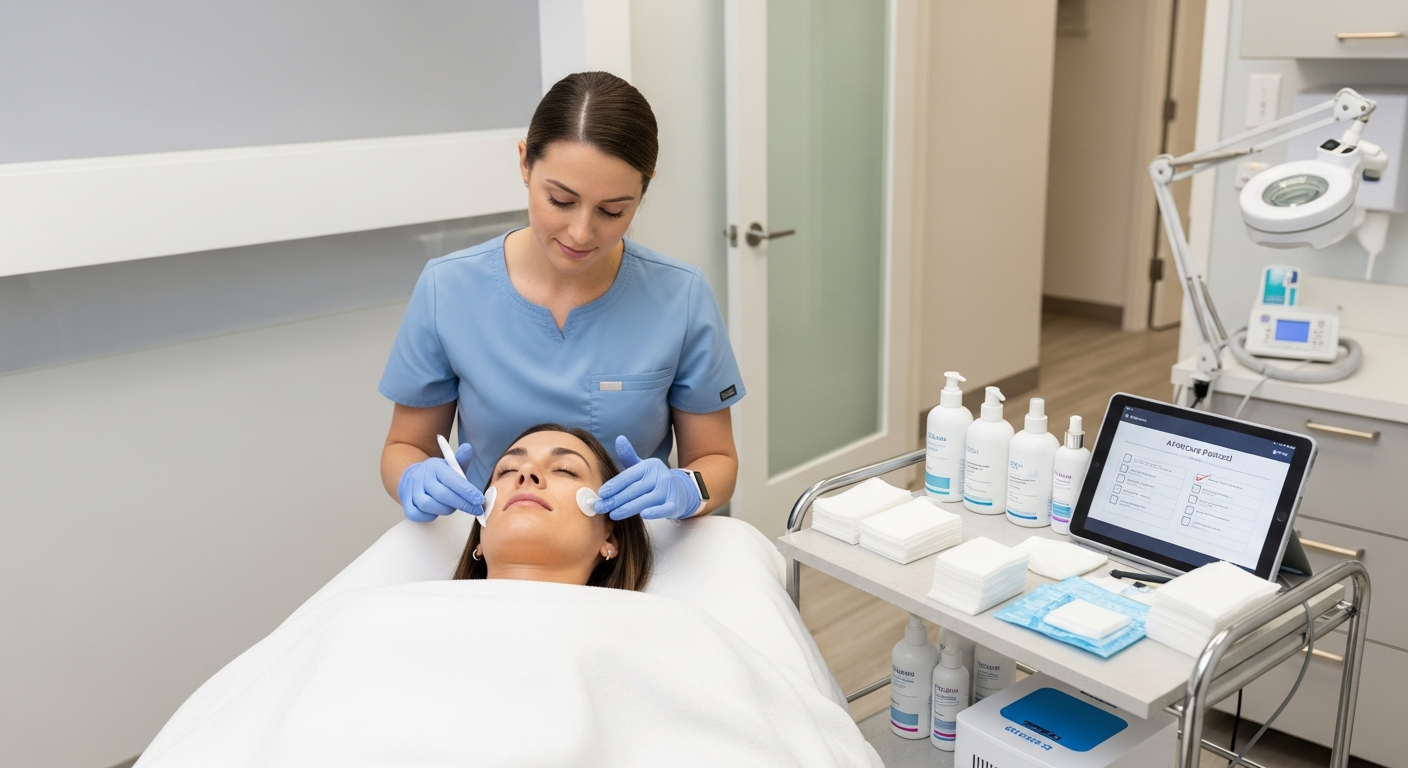
Post-Treatment Management in Med Spa Settings
Post-treatment management in med spa facilities involves implementing standardized clinical protocols to oversee skin recovery following aesthetic procedures. These systems prioritize the reduction of inflammation, management of erythema, and restoration of the skin barrier through consistent workflows that minimize complications and ensure uniform patient outcomes across all clinical providers.
Standardizing Post-Laser Recovery Protocols
Effective management after laser therapy requires immediate attention to thermal regulation.
Clinical protocols should focus on cooling the tissue to resolve heat-induced erythema.
Standardization ensures every patient receives the same cooling duration and frequency.
Providers must monitor for signs of excessive edema in the hours following treatment.
Clear instructions regarding heat avoidance and sun protection are essential for safety.
Establishing a uniform follow-up schedule allows the med spa to track healing milestones.
Microneedling Downtime and Barrier Management
Post-treatment management for microneedling centers on protecting the temporary micro-channels.
Clinical workflows should emphasize the prevention of environmental contamination while the skin closes.
Standardized protocols usually include a period of total abstinence from active ingredients.
Managing the inflammatory response is critical to achieving the desired aesthetic outcome.
Providers should educate patients on the normal progression from erythema to dry texture.
A consistent approach prevents patients from using contraindicated products during the recovery phase.
Chemical Peel Aftercare Systems
Clinical management for chemical peels requires a systematic approach to desquamation.
The primary goal is to ensure the skin exfoliates naturally without premature mechanical intervention.
Staff must provide clear guidelines on managing dryness and sensitivity during the transition.
Protocols should dictate the specific timing for reintroducing daily skincare routines.
Consistency in aftercare reduces the risk of post-inflammatory hyperpigmentation.
Standardized workflows help providers identify abnormal peeling patterns during follow-up visits.
Managing Inflammation and Erythema
Inflammation is a natural part of the wound-healing cascade in a med spa environment.
Clinical management involves distinguishing between healthy therapeutic responses and adverse events.
Standard protocols for erythema reduction often involve specific hydration and cooling steps.
- Observation: Documenting the duration and intensity of redness after each procedure.
- Hydration: Maintaining a moist environment to support rapid epithelialization.
- Protection: Enforcing strict physical barriers to prevent UV-induced complications.
Implementing Standardized Recovery Workflows
Successful med spa operations rely on protocol consistency rather than individual provider judgment.
Every staff member must follow the same clinical steps for post-treatment management.
This uniformity ensures that patient safety remains high regardless of which provider performs the treatment.
Standardized workflows include digital documentation of recovery progress and patient compliance.
Using a structured system allows clinical supervisors to audit outcomes and refine protocols.
Clear, written instructions provided to the patient minimize phone calls and emergency inquiries.
Clinical Safety and Follow-Up Procedures
Establishing a mandatory check-in system helps identify potential issues before they escalate.
Standardized post-treatment management includes clear triggers for when a patient needs an in-person assessment.
This clinical oversight is the foundation of a safe and professional med spa environment.
