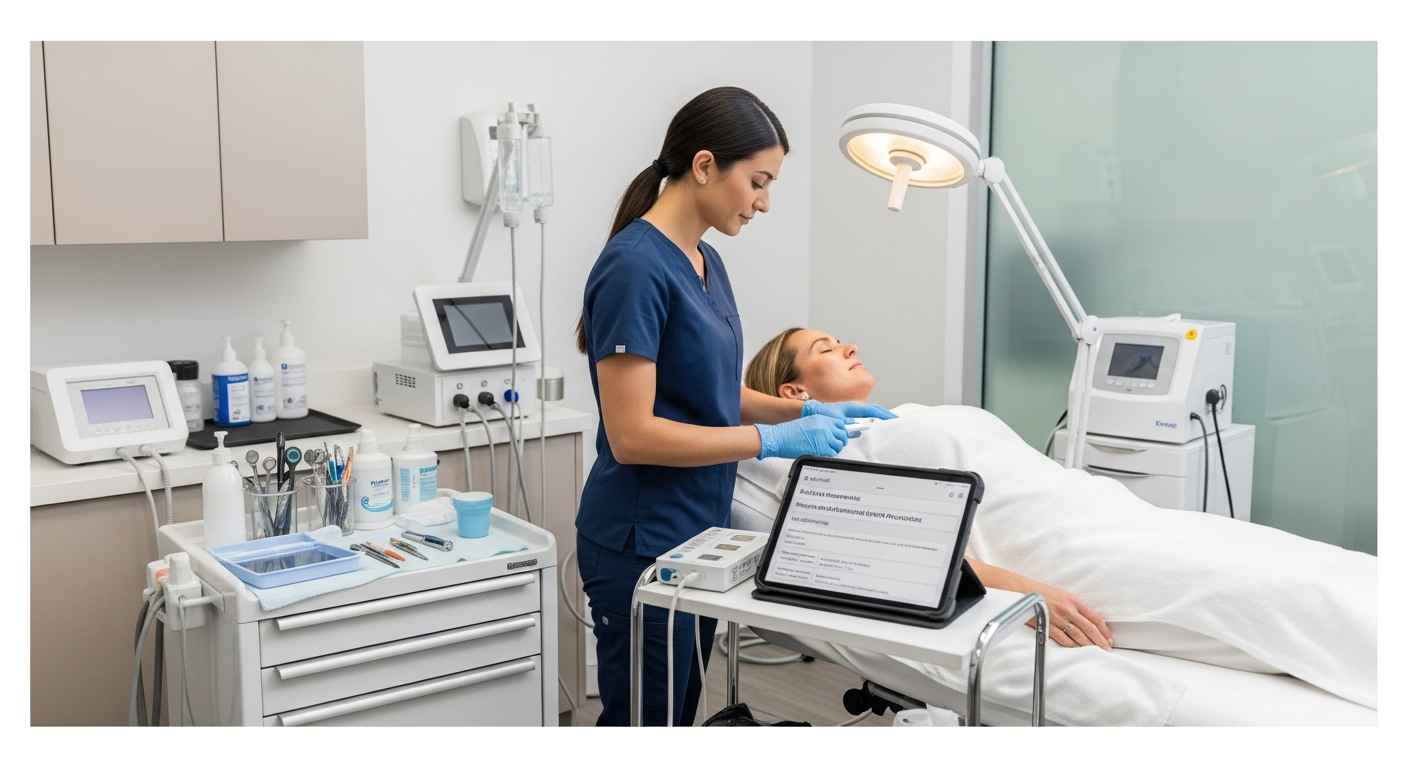
Post-Treatment Management in Med Spas
Post-treatment management in med spa facilities refers to the standardized clinical protocols used to oversee patient recovery after aesthetic procedures. These systems prioritize inflammation control, erythema reduction, and structured downtime management to ensure safety and consistent clinical results across different practitioners and various skin types.
Standardized Post-Laser Recovery Protocols
Post-laser management requires immediate intervention to dissipate residual thermal energy.
Med spas must implement cooling protocols that stabilize skin temperature
without causing additional vascular constriction or tissue shock.
Clinicians should monitor for prolonged erythema beyond the expected
recovery window for specific laser wavelengths.
Standardization ensures every patient receives identical cooling and barrier instructions.
Managing Thermal Response
Clinics must document the duration of heat sensation post-procedure.
Standard workflows include the application of occlusive barriers
to prevent transepidermal water loss during the initial re-epithelialization phase.
Microneedling Downtime Management
Effective microneedling recovery focuses on the rapid closure of micro-channels.
Protocol consistency prevents the introduction of environmental contaminants
while the skin barrier is temporarily compromised.
Standardized instructions for med spa patients include a strict timeline
for resuming topical actives.
Premature use of irritants can lead to chronic inflammation or granulomas.
Hydration and Barrier Repair
Maintaining a sterile and hydrated environment is the priority for the first 24 hours.
Providers must emphasize the avoidance of excessive perspiration
and heat exposure to minimize the risk of secondary post-inflammatory hyperpigmentation.
Chemical Peel Aftercare Systems
Chemical peel management is defined by the depth of the exfoliating agent.
Med spas utilize tiered recovery systems that correspond to
superficial, medium, or deep epidermal disruption.
Standardization prevents patients from prematurely removing desquamating skin.
Manual interference with the peeling process increases the risk of
scarring and uneven pigment distribution during the healing phase.
Phases of Desquamation
Providers must educate patients on the physiological stages of peeling.
Consistent clinical messaging ensures patients do not mistake
normal shedding for an adverse reaction or treatment failure.
Managing Inflammation and Erythema
Inflammation is a necessary component of the wound-healing cascade.
However, med spa protocols must distinguish between
productive therapeutic inflammation and excessive, harmful erythema.
Standardized assessment scales help clinical supervisors identify
atypical vascular responses early.
Rapid identification allows for the adjustment of recovery protocols
to prevent long-term tissue complications.
Standardized Recovery Workflows in Med Spas
Operational success in a med spa depends on protocol consistency over individual judgment.
Every practitioner should follow a unified post-treatment roadmap
to ensure predictable patient outcomes and safety.
Standardized workflows include scheduled follow-up touchpoints and
digital documentation of the healing progress.
This systematic approach reduces clinical variability and enhances patient compliance.
Clinical Documentation Standards
Precise recording of recovery milestones is essential for clinical oversight.
Standardized forms allow med spa owners to track recovery trends
and refine treatment parameters based on aggregate clinical data.
