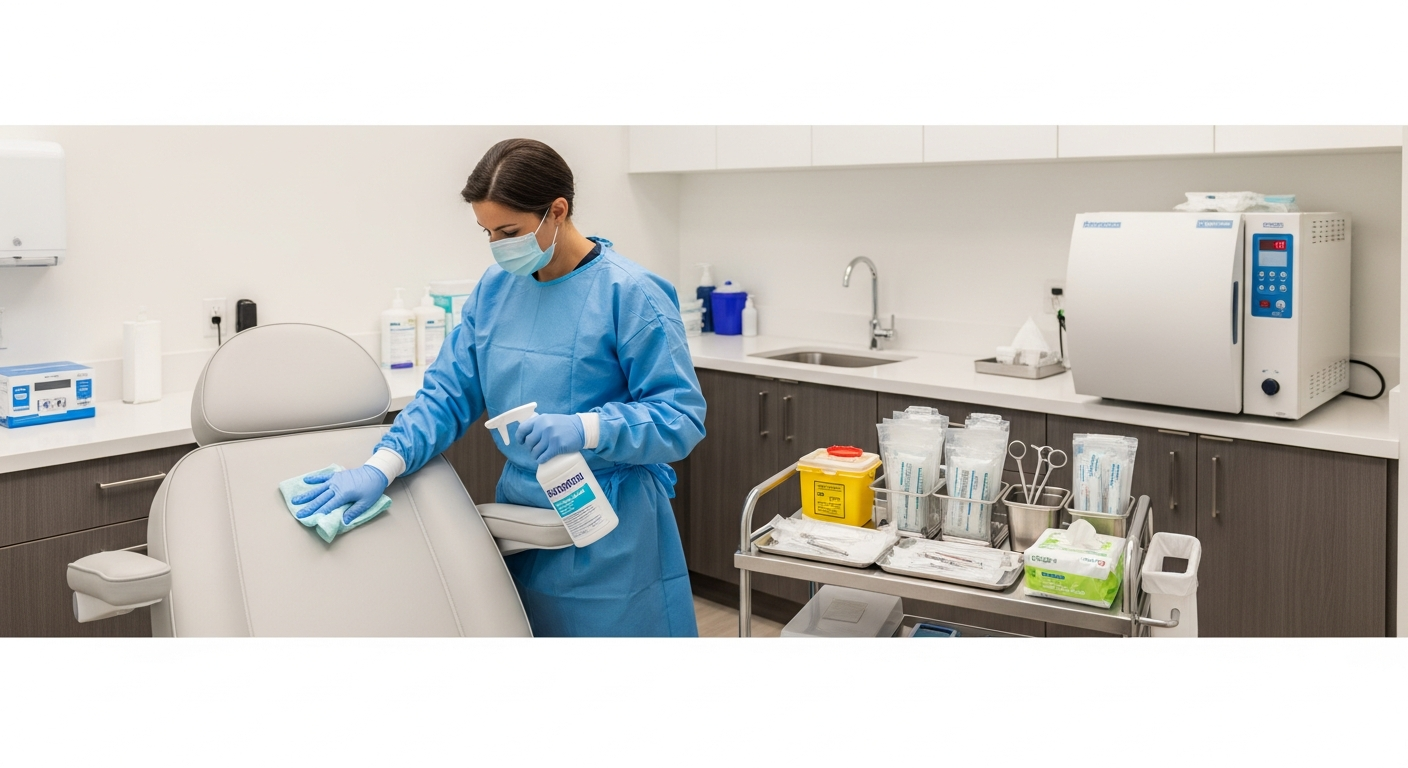
Med Spa Infection Control and Clinical Safety Standards
Med spa infection control refers to the systematic implementation of sanitation, disinfection, and sterilization protocols designed to prevent the spread of pathogens during aesthetic treatments. These OSHA-aligned practices include rigorous hand hygiene, proper use of personal protective equipment, and meticulous decontamination of treatment rooms to ensure a sterile environment for both practitioners and clients.
OSHA-Aligned Sanitation and PPE Protocols
Med spa facilities must adhere to Occupational Safety and Health Administration (OSHA) standards to protect staff and clients from bloodborne pathogens. Proper hand hygiene remains the foundation of any clinical safety program.
Practitioners must use medical-grade personal protective equipment (PPE), including gloves, masks, and eye protection, during any procedure involving skin penetration or fluid exposure. PPE must be changed between every client session.
Safe disposal of sharps and biohazardous waste is a critical component of infection control. All needles and lancets must be placed in puncture-resistant containers immediately after use to prevent accidental needlestick injuries.
Treatment Room Disinfection Systems
Clinical surfaces in a med spa require a tiered approach to decontamination. All high-touch surfaces, such as treatment tables, counters, and stools, must be cleaned with EPA-registered disinfectants between every appointment.
Surface disinfectants must be used according to the manufacturer’s instructions, ensuring the correct contact time to achieve a full kill-rate for viruses and bacteria. Porous materials should be replaced with non-porous alternatives.
Room turnover protocols should include the removal of all used linens and the cleaning of equipment cables or control panels. Maintaining a documented cleaning log ensures that every room meets safety standards throughout the day.
Sterilization Standards for Clinical Tools
Any multi-use tool that penetrates the skin or contacts mucosal membranes must undergo a rigorous sterilization process. High-pressure steam autoclaves are the standard for achieving total microbial destruction in med spas.
Sterilization cycles must be monitored using chemical indicators and regular biological spore testing to verify equipment efficacy. Sterile tools must remain in sealed pouches until the moment they are needed for a treatment.
Single-use items, such as micro-needling cartridges or applicator tips, must never be reused or re-sterilized. Proper inventory management ensures that clinicians always have access to disposable, factory-sealed components for every procedure.
Preventing Cross-Contamination in Aesthetic Settings
Cross-contamination prevention requires a clear physical separation between “clean” and “dirty” zones within the med spa. Sterile supplies should never be stored in areas where used instruments are processed.
Practitioners must follow aseptic techniques during treatments to avoid contaminating sterile fields. This includes avoiding contact with non-sanitized surfaces once gloves have been donned for a clinical procedure.
Regular training for clinical supervisors and staff ensures that safety protocols are applied consistently. A systematic approach to infection control reduces liability and maintains the highest standard of care in the facility.
