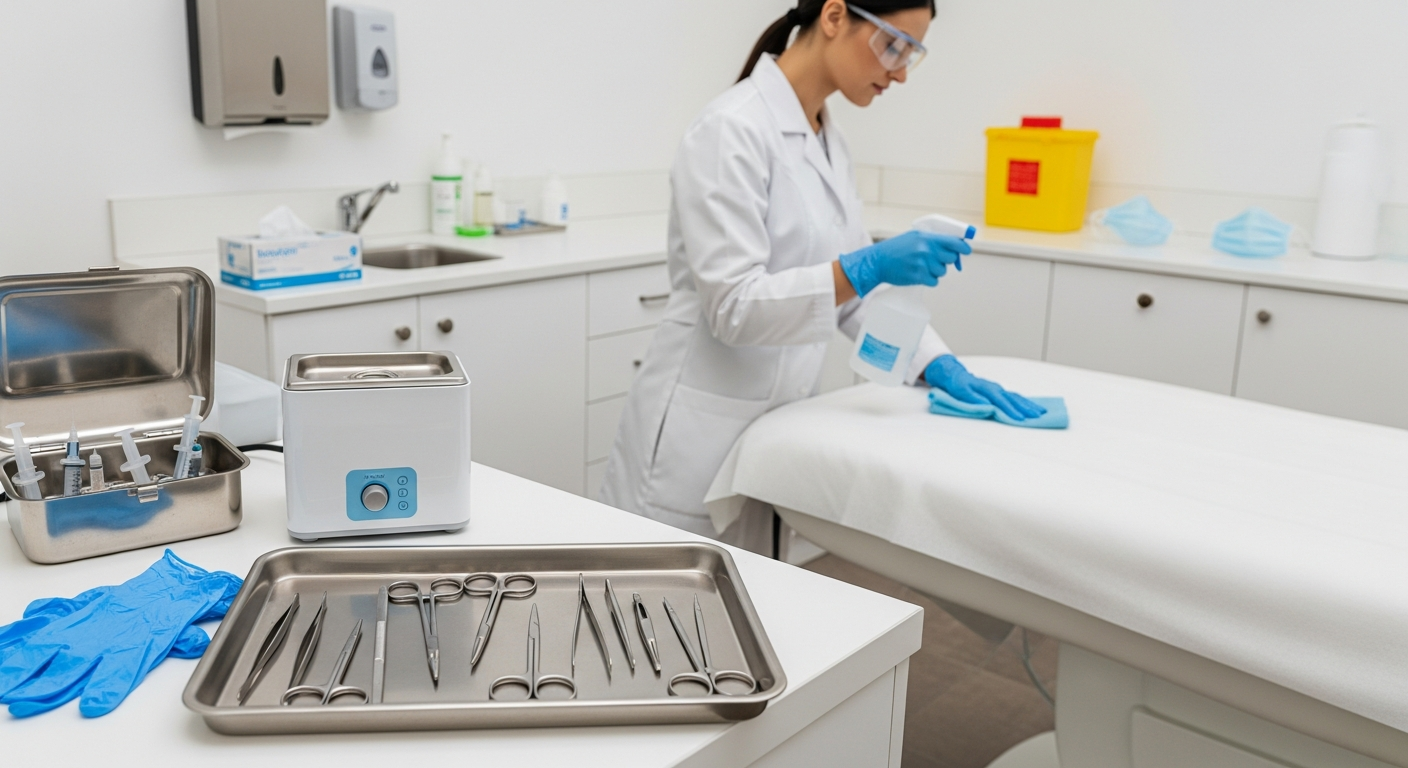
Best Practices for Med Spa Infection Control
Med spa infection control is a systematic set of sanitation, disinfection, and sterilization protocols designed to prevent healthcare-associated infections and cross-contamination within aesthetic clinics. These OSHA-aligned practices include rigorous hand hygiene, environmental surface disinfection, proper sterilization of reusable instruments, and the consistent use of personal protective equipment to ensure provider and client safety.
Standard Precautions in the Med Spa Environment
Establishing a foundation of safety requires the consistent application of standard precautions for every client. These protocols assume that all blood and body fluids are potentially infectious.
Hand Hygiene Protocols
Proper handwashing is the most effective way to prevent the spread of pathogens. Providers must wash hands before and after client contact and after removing gloves.
Use antimicrobial soap and water when hands are visibly soiled. Alcohol-based hand rubs are acceptable for routine decontamination between non-invasive treatment steps.
Personal Protective Equipment Usage
Personal protective equipment (PPE) serves as a barrier between the provider and infectious materials. Standard med spa PPE includes medical-grade gloves, masks, and eye protection.
Gloves must be changed between every client and after any contact with contaminated surfaces. Masks should be replaced if they become damp or soiled during a procedure.
Systematic Treatment Room Disinfection
Treatment rooms must be decontaminated between every appointment to maintain a sterile environment. This process involves cleaning surfaces to remove debris followed by professional disinfection.
Surface Decontamination Procedures
All non-porous surfaces, including treatment tables and counters, require intermediate-level disinfection. Use EPA-registered disinfectants that are effective against common bloodborne pathogens.
Allow the disinfectant to remain wet on the surface for the full contact time specified by the manufacturer. This ensures the total elimination of bacteria and viruses.
High-Touch Point Management
Identify and sanitize high-touch points that are often overlooked during room turnover. This includes light switches, door handles, cabinet pulls, and equipment control panels.
Using barrier films on equipment screens and handles can further reduce the risk of cross-contamination. Replace these barriers after every individual treatment session.
Instrument Sterilization and Reprocessing
Reusable instruments that penetrate the skin or contact mucous membranes require high-level sterilization. Proper reprocessing prevents the transmission of bloodborne diseases.
Cleaning vs. Sterilization
Cleaning is the physical removal of organic soil and must occur before sterilization. Use ultrasonic cleaners to remove debris from fine instrument crevices without damaging the tools.
Sterilization is the total destruction of all microbial life, including spores. Most med spas utilize autoclaves, which use saturated steam under pressure to achieve sterility.
Sterilization Record Keeping
Maintaining accurate logs is essential for OSHA compliance and facility safety. Document every sterilization cycle, including the date, time, temperature, and pressure readings.
Use chemical indicators on every package to confirm the contents reached the necessary temperature. Perform weekly biological spore testing to verify the autoclave is functioning correctly.
Cross-Contamination Prevention Strategies
Cross-contamination occurs when pathogens are transferred from one surface or person to another. Strict clinical workflows are necessary to isolate clean and dirty items.
Single-Use Item Disposal
Single-use items, such as cotton swabs, gauze, and wooden applicators, must be discarded immediately after use. Never “double-dip” applicators into multi-use product containers.
Dispense products into small, disposable cups before starting a treatment. This prevents the primary product container from becoming contaminated during the procedure.
Safe Sharps Handling
Needles and lancets must be disposed of in puncture-resistant, leak-proof sharps containers immediately after use. Never recap, bend, or break needles by hand.
Place sharps containers at the point of use to minimize the distance a used needle must travel. Seal and replace containers once they reach the indicated fill line.
