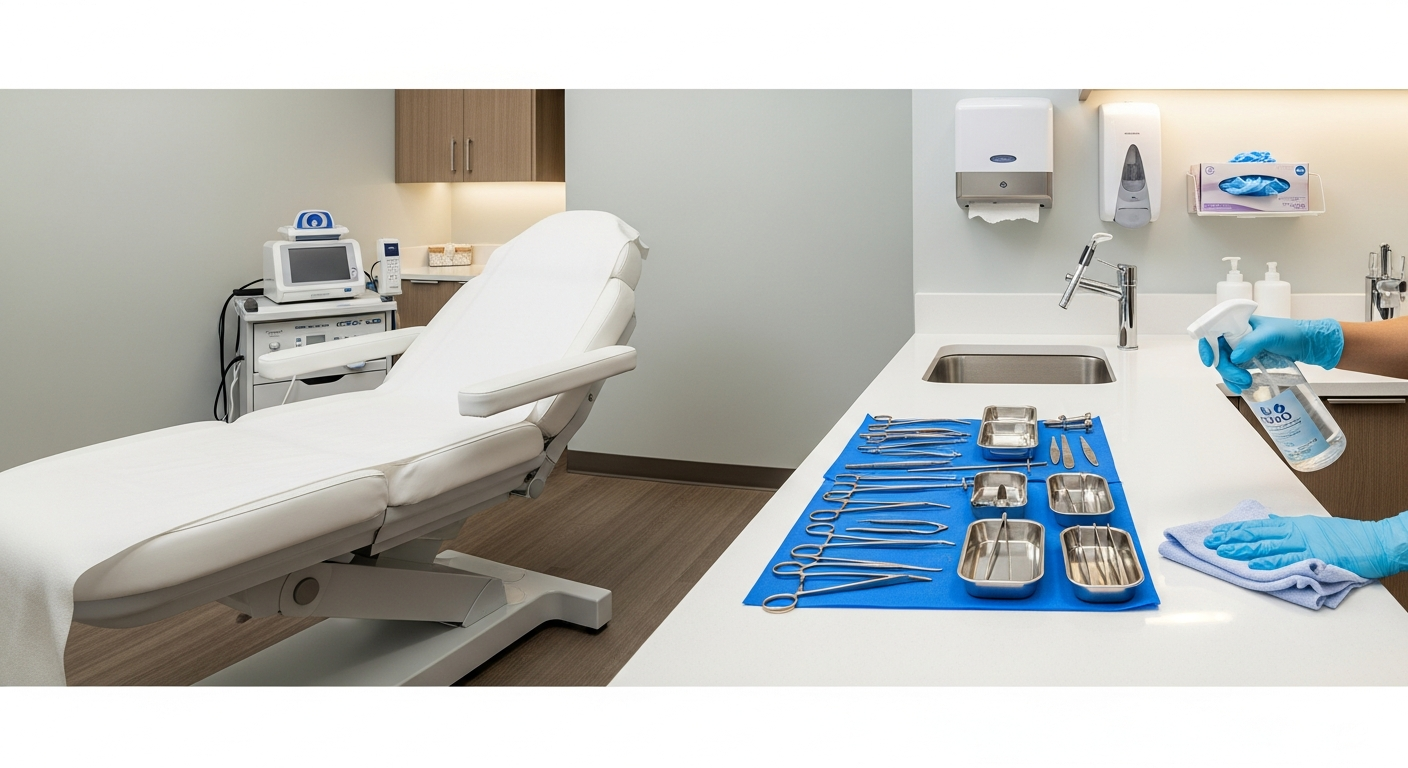
Med Spa Infection Control and Clinical Safety Standards
Med spa infection control refers to the systematic implementation of sanitation, disinfection, and sterilization protocols designed to prevent the transmission of pathogens during aesthetic treatments. These practices ensure compliance with OSHA standards and protect both clients and practitioners by maintaining a sterile environment through rigorous treatment room management and equipment processing.
Regulatory Framework for Med Spa Sanitation
Every facility must adhere to federal and state guidelines regarding bloodborne pathogens.
These regulations mandate that clinical environments maintain specific cleaning logs and safety data sheets.
Compliance ensures that the facility operates within legal safety requirements for aesthetic practices.
Standard precautions assume that all blood and body fluids are potentially infectious.
Practitioners must utilize barriers and consistent hand hygiene to mitigate risks during procedures.
This systematic approach forms the foundation of a robust clinical safety program.
Treatment Room Disinfection Protocols
Effective med spa infection control begins with the distinction between cleaning and disinfecting.
Cleaning removes visible debris from surfaces, while disinfection kills specific bacteria and viruses.
Both steps are required for all non-porous surfaces between every client appointment.
Surface Management and Contact Time
High-touch surfaces such as treatment tables, counters, and stools require EPA-registered disinfectants.
The disinfectant must remain wet on the surface for the full manufacturer-recommended contact time.
Failure to observe this dwell time compromises the effectiveness of the germicidal process.
Disposable barriers can be used on equipment that is difficult to clean effectively.
These covers must be discarded and replaced after every single treatment session.
This practice adds an extra layer of protection against cross-contamination in busy clinics.
Sterilization Standards for Reusable Instruments
Instruments that penetrate the skin or contact mucous membranes require high-level sterilization.
Cleaning tools with soap and water is only the first step in the reprocessing cycle.
True sterilization is achieved through pressurized steam or specific chemical immersion processes.
Autoclave Operation and Monitoring
The use of an autoclave is the industry standard for heat-stable reusable instruments.
Practitioners must use chemical indicators and biological spore tests to verify equipment function.
Regular testing logs provide documented proof that the sterilization process is successful.
Instruments should be bagged in specialized pouches that maintain sterility until they are opened.
The integrity of the packaging must be inspected before every use in the treatment room.
Expired or compromised pouches require the tools to be reprocessed immediately.
Preventing Cross-Contamination in Aesthetic Settings
Cross-contamination occurs when pathogens are transferred from one surface or person to another.
In a med spa, this often happens through improper handling of multi-use products or tools.
Strict adherence to single-use item disposal is critical for maintaining a sterile field.
Personal Protective Equipment (PPE) Systems
Gloves must be changed between every task and whenever they become contaminated or torn.
Eye protection and face masks provide a physical barrier against accidental splashes or sprays.
PPE is a primary defense mechanism required under OSHA bloodborne pathogen standards.
Hand hygiene is the most effective way to prevent the spread of clinical infections.
Hands must be washed or sanitized before donning gloves and immediately after removing them.
Consistent hand hygiene habits protect the integrity of the entire clinical workspace.
Waste Management and Sharp Safety
Proper disposal of biohazardous material is a core component of med spa infection control.
Needles and blades must be discarded in puncture-resistant sharps containers immediately after use.
These containers should be replaced when they reach the designated fill line to avoid injury.
General waste must be separated from regulated medical waste according to local guidelines.
Contaminated gauze or linens require specific handling and laundering protocols to ensure safety.
A clear waste management system prevents environmental contamination within the facility.
