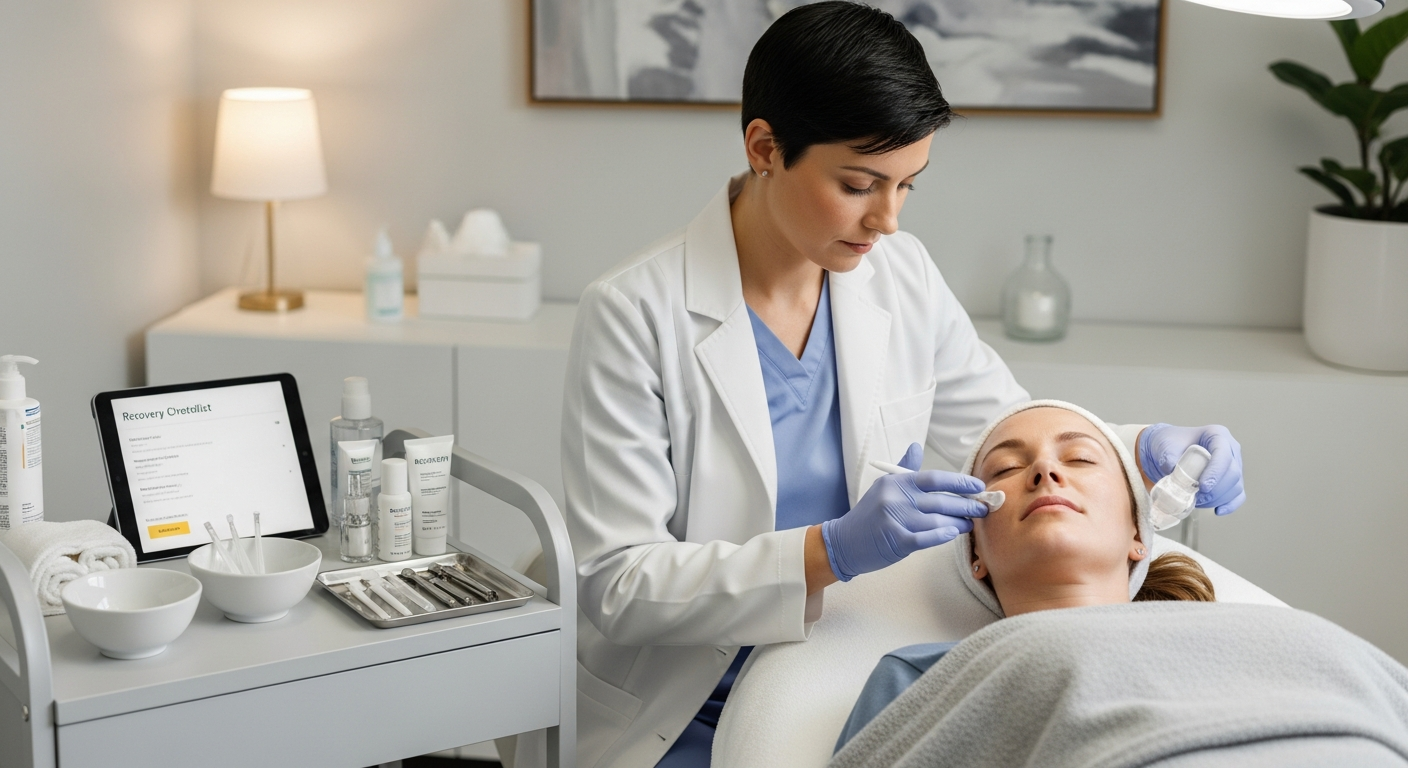
Post-Treatment Management in Med Spa
Post-treatment management in med spa refers to the standardized clinical protocols used to monitor recovery and mitigate side effects following aesthetic procedures. These systems ensure consistent care for inflammation, erythema, and barrier repair after laser, microneedling, or chemical peel treatments, significantly reducing patient downtime and the risk of adverse complications.
Standardizing Recovery After Laser Procedures
Effective post-treatment management in med spa settings begins with cooling the tissue.
Standardized protocols require immediate thermal reduction to prevent extended heat-induced inflammation.
Clinicians must provide clear guidelines on managing the heat sensation and protecting the treated area from UV exposure.
Managing Erythema and Thermal Stress
Erythema is a common clinical endpoint for many laser treatments.
A standardized workflow involves documenting the duration and intensity of redness.
Providers should follow a set schedule for applying occlusive barriers or soothing topicals to maintain moisture.
Microneedling Downtime Management Protocols
Microneedling creates thousands of micro-channels that require specific post-treatment management in med spa environments.
The focus remains on preventing infection and maintaining a sterile environment during the initial inflammatory phase.
Standardized instructions include avoiding irritants like retinols or alpha-hydroxy acids for a set duration.
Barrier Restoration Systems
Aesthetic providers must emphasize the importance of epidermal barrier restoration.
Consistency in follow-up calls helps identify if the patient is experiencing normal shedding or excessive irritation.
Structured recovery workflows ensure that every patient receives identical instructions to avoid provider-specific variables.
Chemical Peel Aftercare and Desquamation Control
Post-treatment management in med spa facilities for chemical peels focuses on the desquamation process.
Patients must be instructed not to manually remove peeling skin to prevent post-inflammatory hyperpigmentation.
Providers use standardized checklists to monitor the depth of the peel and the resulting cellular turnover.
-
Core Recovery Workflow Components:
- Standardized printed aftercare instructions given to every patient.
- Specific timelines for the reintroduction of active ingredients.
- Scheduled follow-up assessments to monitor clinical progress.
- Consistent documentation of inflammation levels and healing rates.
Implementing Clinical Recovery Workflows
Consistency in post-treatment management in med spa operations reduces clinical errors.
When every provider follows the same recovery roadmap, the clinic can better predict healing timelines.
This structured approach allows the clinical supervisor to identify outliers and manage complications more effectively.
Standardized workflows should include clear triggers for when a patient needs to return for a clinical assessment.
By removing individual judgment from the recovery process, the med spa ensures a safer patient experience.
Reliable protocols for managing inflammation and erythema are essential for maintaining clinical standards.
