Understanding Med Spa Regulations in the United States
Med spa regulations are state-specific legal frameworks that dictate how medical aesthetic clinics must operate, focusing on patient safety, professional licensing, and medical supervision. These regulations require that clinical procedures, such as neurotoxin injections and laser treatments, are performed by qualified practitioners under the oversight of a licensed medical director.
State-Specific Licensing and Governance
Every state maintains unique statutes governing the operation of medical spas. Most jurisdictions classify aesthetic treatments like Botox, dermal fillers, and chemical peels as the practice of medicine.
Compliance begins with understanding which state board oversees your facility. In most cases, the Board of Medicine or the Board of Nursing sets the standards for practice.
Failure to adhere to state-specific rules can lead to heavy fines, license revocation, or allegations of practicing medicine without a license. Always verify local statutes before opening.
The Corporate Practice of Medicine (CPOM) Doctrine
Many states follow the Corporate Practice of Medicine doctrine. This legal principle prohibits non-physicians or general business corporations from owning a medical practice or employing physicians.
In CPOM states, a med spa must typically be owned by a licensed physician or a professional corporation. Business owners often use Management Services Organizations (MSOs) to handle non-clinical operations.
Medical Director and Supervision Requirements
A medical director is a foundational requirement for regulatory compliance in any med spa. This individual must be a licensed physician responsible for the clinical integrity of the facility.
Supervision levels vary by state, ranging from “on-site” supervision to “off-site” availability via telecommunication. The director must ensure that all staff members are operating within their legal scope.
The medical director is also responsible for the “good faith examination.” This initial patient assessment must be performed before any medical treatment is administered by a nurse or assistant.
Defining the Legal Scope of Practice
Compliance depends on ensuring that every team member performs only the tasks allowed by their specific professional license. This is known as the legal scope of practice.
- Physicians: Full scope of medical and surgical aesthetic procedures.
- Registered Nurses (RNs): Can often perform injections and laser treatments under physician supervision.
- Aestheticians: Generally limited to non-invasive surface treatments like facials and superficial peels.
- Medical Assistants: Highly restricted in many states regarding the administration of medication or lasers.
Inspection Readiness and Safety Standards
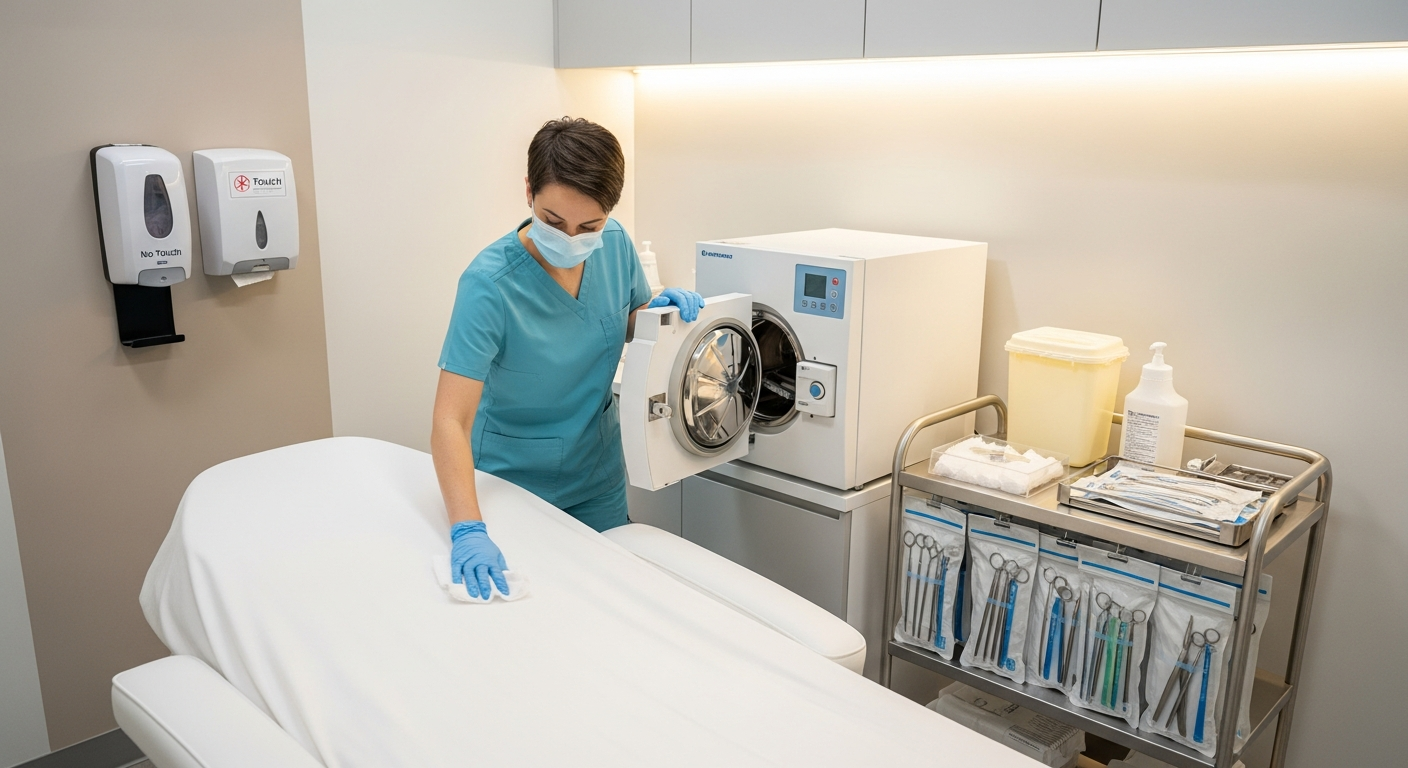
State boards and health departments may conduct unannounced inspections of your facility. Maintaining “inspection readiness” is a core component of a compliant business model.
Inspectors typically review facility cleanliness, equipment maintenance logs, and medication storage protocols. They also verify that all staff licenses are current and prominently displayed.
Compliance also extends to OSHA standards for bloodborne pathogens and HIPAA regulations for patient data privacy. Environmental safety and emergency protocols must be documented and practiced.
Essential Compliance Documentation
Maintaining a paper trail is the best defense against regulatory scrutiny. Every med spa must maintain comprehensive records that demonstrate a commitment to legal standards.
- Standard Operating Procedures (SOPs): Written protocols for every medical treatment offered.
- Patient Consent Forms: Documentation proving patients were informed of risks and benefits.
- Delegation Agreements: Formal contracts outlining the tasks delegated by the medical director.
- Training Logs: Proof of ongoing education and competency for all clinical staff members.
The Risks of Non-Compliance
Operating outside of med spa regulations carries significant legal and financial risks. Regulators focus heavily on the unauthorized practice of medicine and improper supervision structures.
Aesthetic business owners must prioritize compliance over operational shortcuts. Professional legal counsel specialized in healthcare law is recommended to ensure all structures meet state requirements.
