Essential Med Spa Infection Control and Safety Protocols
Med spa infection control refers to the systematic implementation of sanitation, disinfection, and sterilization protocols designed to prevent cross-contamination in aesthetic clinical settings. These practices include OSHA-aligned bloodborne pathogen training, rigorous treatment room disinfection, and the use of high-level disinfectants to maintain a sterile environment for both practitioners and clients during aesthetic procedures.
Core Pillars of Med Spa Infection Control
Every facility must establish a written infection control plan. This document outlines the specific steps required to maintain a sanitary environment and identifies high-risk areas.
Consistent hand hygiene remains the most effective way to prevent the spread of pathogens. Practitioners must wash hands before and after every client contact using antimicrobial soap.
Personal Protective Equipment (PPE) must be utilized based on the risk of exposure. This typically includes medical-grade gloves, face masks, and eye protection during invasive treatments.
OSHA-Aligned Sanitation Practices
Med spas must adhere to OSHA Bloodborne Pathogens Standards to protect staff. This includes the use of puncture-resistant sharps containers for all needles and lancets.
Annual training ensures all team members understand how to handle potential biohazards. Documentation of these training sessions is mandatory for regulatory compliance and workplace safety.
Treatment Room Disinfection Systems
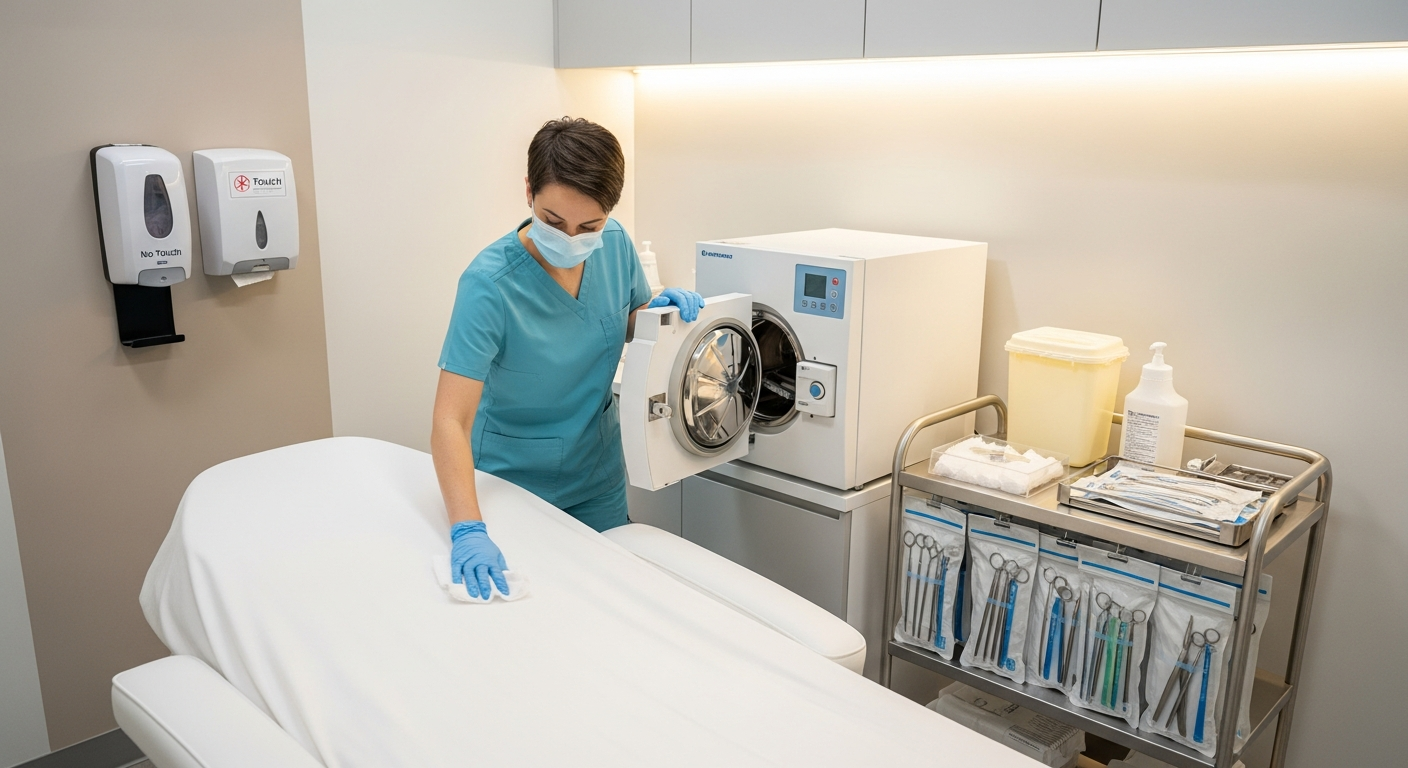
Every treatment room requires a complete disinfection cycle between clients. This process targets all “high-touch” surfaces, including treatment tables, stools, and product counters.
Environmental surfaces should be cleaned using EPA-registered, hospital-grade disinfectants. These solutions must remain wet on the surface for the full manufacturer-recommended contact time.
Pre-Treatment Room Preparation
- Remove all used linens and place them in leak-proof laundry bags.
- Sanitize the treatment table and headrest with approved wipes.
- Cover contact surfaces with disposable barriers to prevent fluid penetration.
Post-Treatment Sanitation Cycles
After each procedure, practitioners must dispose of all single-use items immediately. This includes cotton rounds, wooden spatulas, and disposable applicator tips used during the session.
Reusable equipment must be moved to a designated “soiled” area for processing. Never clean used tools in the same sink used for handwashing or clinical preparation.
Sterilization and Tool Management
Any instrument that penetrates the skin or contacts sterile tissue must be sterilized. In a med spa, this often involves the use of an autoclave or dry heat sterilizer.
Items that only contact intact skin require high-level disinfection rather than full sterilization. However, these tools must still undergo a rigorous cleaning process to remove debris.
Autoclave and Chemical Standards
Autoclaves must be monitored regularly using biological indicators or spore tests. These tests confirm that the equipment is reaching the temperature and pressure required to kill pathogens.
Sterilized tools should remain in their sealed pouches until the moment of use. If a pouch is punctured or wet, the tools are no longer considered sterile.
Cross-Contamination Prevention
Cross-contamination often occurs when practitioners touch “clean” supply containers with contaminated gloves. Utilizing “no-touch” dispensing systems helps mitigate this significant clinical risk.
Clinicians should use sterile forceps or clean spatulas to remove products from bulk containers. Never “double-dip” tools into shared product jars, as this introduces bacteria into the supply.
Proper airflow and ventilation also play a role in maintaining a clean environment. Regularly changing HVAC filters helps reduce the concentration of airborne particles in treatment rooms.
