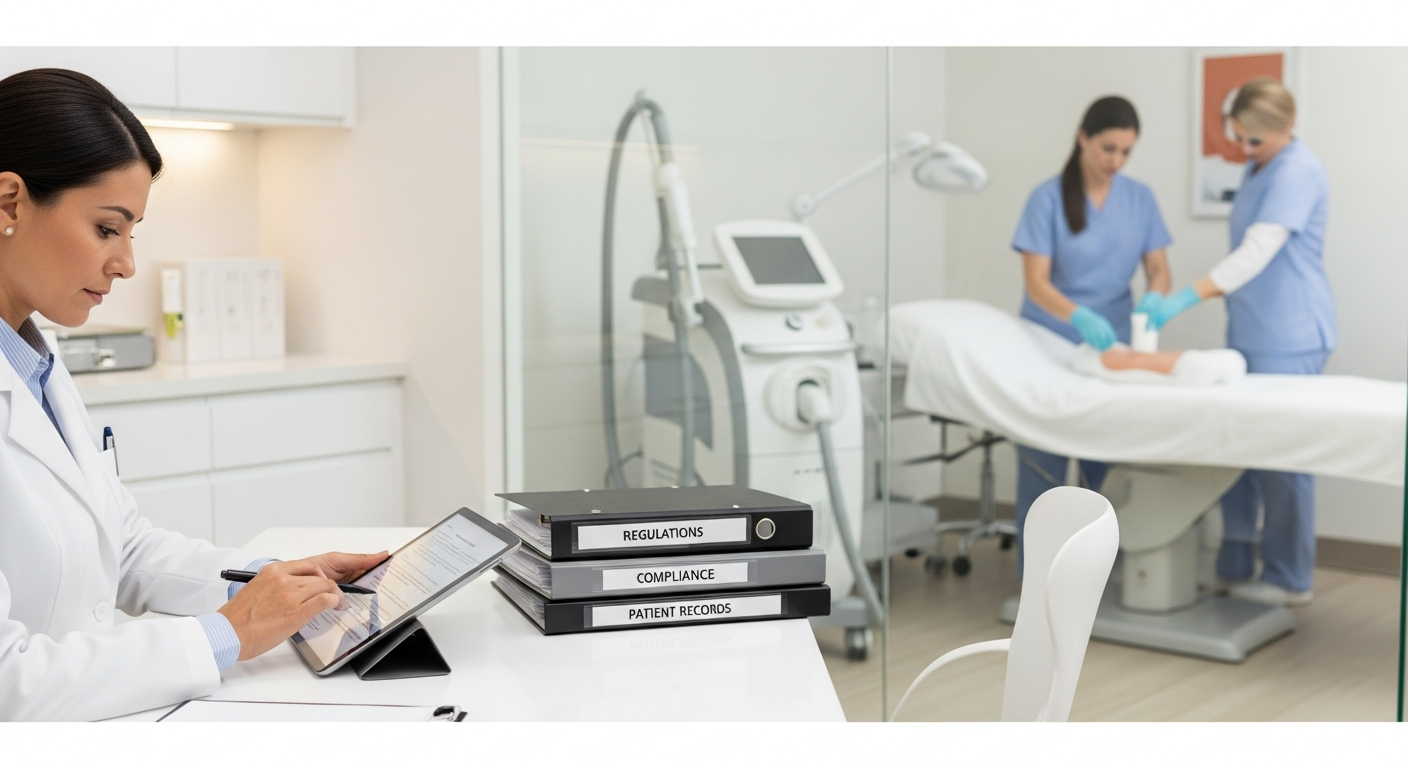
Navigating US Med Spa Regulations and Compliance
Med spa regulations are the state-specific laws and medical board rules that dictate the ownership, supervision, and operational standards of aesthetic medical practices. These regulations ensure that medical procedures, such as neurotoxin injections and laser treatments, are performed by qualified professionals under the oversight of a licensed medical director.
State-Level Oversight and Ownership Rules
In the United States, med spa regulations vary significantly by state, as medical boards govern the practice of medicine. Many states follow the Corporate Practice of Medicine (CPOM) doctrine, which prohibits non-physicians from owning a medical practice.
Business owners in CPOM states often utilize a Management Services Organization (MSO) model to maintain compliance. This structure allows a non-medical entrepreneur to handle administrative tasks while a physician-owned professional corporation manages clinical services.
Medical Director and Supervision Requirements
A core component of med spa regulations is the requirement for a Medical Director. This individual is typically a licensed physician responsible for the safety and efficacy of all medical treatments provided at the facility.
Supervision levels are categorized as general, direct, or immediate, depending on the state’s specific dental or medical board rules. The Medical Director must ensure that all staff members are operating within their legally defined scope of practice.
The Role of the Good Faith Examination
Before any medical treatment begins, regulations usually require a Good Faith Examination (GFE). A physician, physician assistant, or nurse practitioner must evaluate the patient to determine if the proposed medical treatment is appropriate.
Performing medical procedures without a prior GFE is a frequent cause of regulatory disciplinary action. Compliance requires documenting these exams in the patient’s permanent medical record before the first treatment session.
Legal Scope of Practice for Aesthetic Providers
Med spa regulations define which procedures specific professionals can perform. While a Registered Nurse (RN) may administer injections in most states, they must do so under a standardized procedure or a physician’s order.
Estheticians are generally restricted to non-invasive treatments that do not reach the dermis. Using medical-grade devices or performing chemical peels beyond a certain depth often requires a medical license under state law.
Inspection Readiness and Mandatory Documentation
Maintaining inspection readiness is critical for ongoing compliance with med spa regulations. State boards may conduct unannounced inspections to review occupational safety and clinical protocols.
- OSHA Compliance: Facilities must follow bloodborne pathogen standards and maintain proper biohazard disposal logs.
- HIPAA Privacy: Patient records must be stored in secure, encrypted systems to protect sensitive health information.
- Policy Manuals: Clinics must maintain written protocols for every medical procedure offered at the facility.
Standards for Medical Record Keeping
Accurate documentation is the best defense against regulatory scrutiny. Every patient chart must include an informed consent form, treatment notes, and detailed device settings or product lot numbers.
Regulatory bodies expect to see a clear clinical trail from the initial consultation to the post-treatment follow-up. Failure to maintain these records can result in fines, license suspension, or the permanent closure of the med spa.
