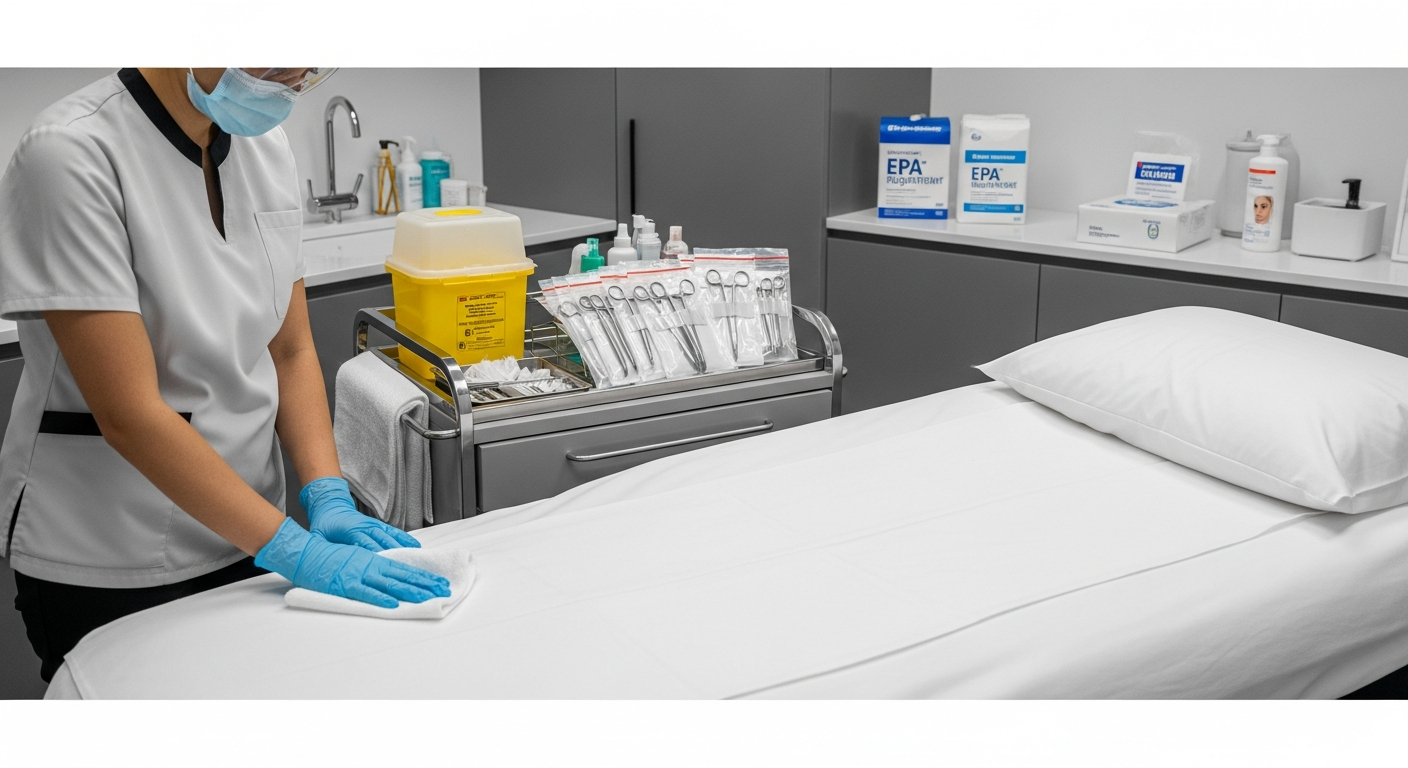
Med Spa Infection Control and Clinical Safety Standards
Med spa infection control is a set of clinical protocols designed to prevent the spread of pathogens during aesthetic treatments through rigorous sanitation, disinfection, and sterilization. These systems prioritize OSHA compliance, proper waste disposal, and the systematic cleaning of treatment rooms to maintain a sterile environment for both staff and clients.
Core Sanitation Protocols for Aesthetic Facilities
Establishing a foundation of hygiene begins with strict hand-washing protocols. Every clinical provider must wash their hands with antimicrobial soap before and after every patient contact or procedure.
Staff should use disposable towels to dry hands and avoid touching faucet handles directly after cleaning. Hand sanitizer should be available as a secondary measure but never replaces soap and water for visible soil.
OSHA-Aligned Safety Standards for Med Spas
Adherence to Occupational Safety and Health Administration (OSHA) standards is mandatory for preventing workplace injuries and exposure. This includes maintaining an updated exposure control plan tailored to aesthetic treatments.
Bloodborne Pathogen Compliance
Med spa employees must receive annual training on bloodborne pathogens to manage risks associated with needles and fluids. Facilities must provide appropriate sharps containers that are puncture-resistant and leak-proof.
Sharps containers should be placed in the immediate area where treatments occur to minimize the distance needles travel. Containers must be replaced when they reach the designated fill line to prevent accidental needle sticks.
Personal Protective Equipment (PPE) Usage
The consistent use of personal protective equipment is vital for barrier protection. Providers must wear medical-grade gloves, masks, and eye protection during any procedure involving skin penetration or fluid exposure.
Gloves must be changed between every client and never reused or washed. Masks should be discarded if they become damp or soiled during a treatment to maintain their filtration efficacy.
Treatment Room Disinfection Systems
Treatment rooms require a systematic “top-to-bottom” cleaning approach between every client. All high-touch surfaces, including treatment tables, stools, and countertops, must be wiped with EPA-registered disinfectants.
Disinfectants must remain wet on the surface for the full contact time specified by the manufacturer. Failure to observe this dwell time can result in incomplete neutralization of bacteria and viruses.
- Intermediate-level disinfectants: Used for surfaces contaminated with blood or fluids.
- Low-level disinfectants: Used for general environmental surfaces like floors or cabinetry.
- Disposable barriers: Plastic sleeves or covers should be used on equipment that is difficult to clean.
Sterilization and Instrument Processing
Any multi-use instrument that penetrates the skin or contacts mucosal membranes requires high-level sterilization. This process typically involves ultrasonic cleaning followed by pressurized steam sterilization in an autoclave.
Sterilization pouches must include internal and external chemical indicators to verify that the steam reached the tools. Med spas should perform weekly biological indicator tests to ensure the autoclave is functioning correctly.
Instruments must remain in their sealed, sterile packaging until the exact moment of use. If a package is torn or wet, the instruments inside are considered contaminated and must be reprocessed immediately.
Cross-Contamination Prevention Strategies
Cross-contamination is prevented by strictly separating clean supplies from dirty materials. A one-way flow of instruments from the treatment room to the decontamination area reduces the risk of accidental exposure.
Single-use items, such as gauze, cotton swabs, and disposable applicators, must be discarded immediately after use. Providers should never “double-dip” tools into shared product jars; instead, use sterile spatulas to dispense products.
Staff should also be trained to identify signs of infection in clients before starting any procedure. Postponing treatments on compromised skin is a critical step in maintaining a safe clinical environment.
