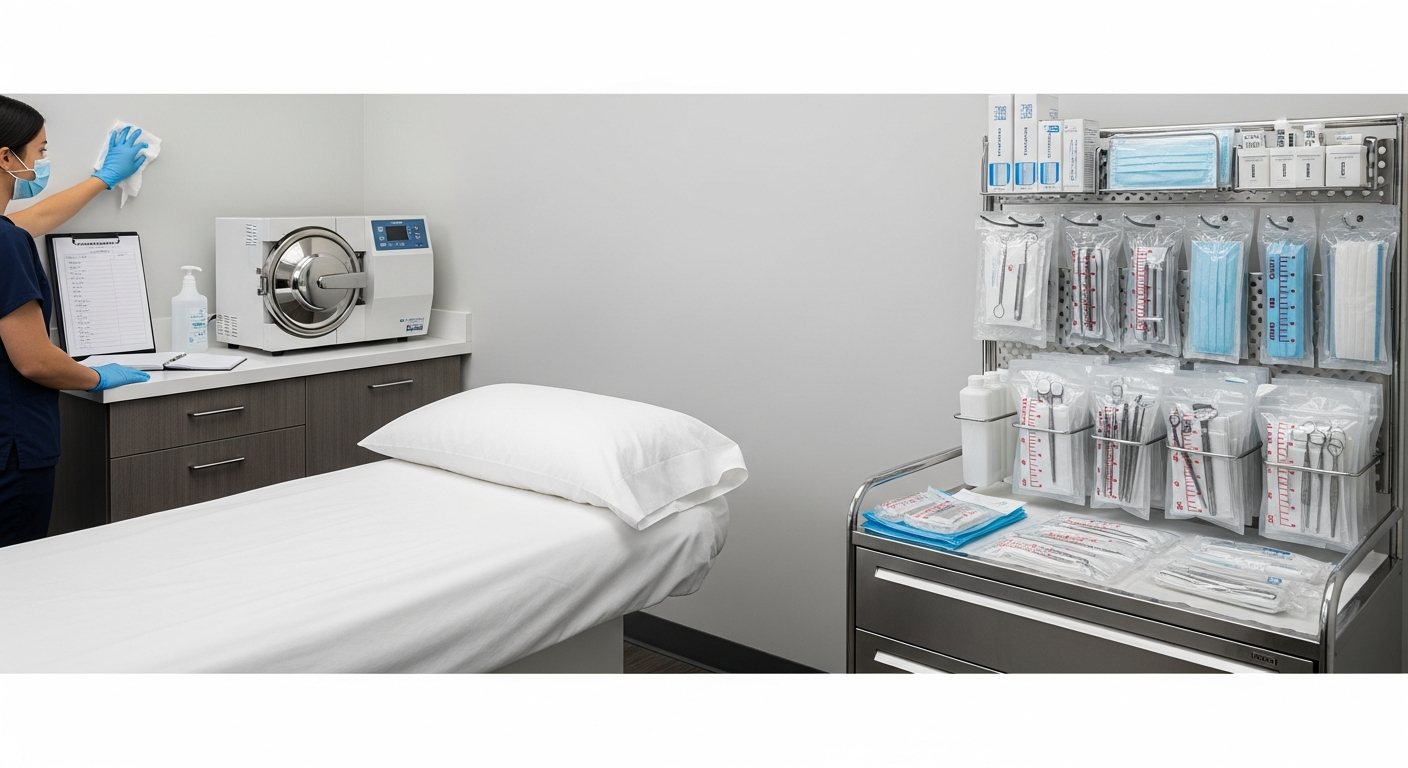
Med Spa Infection Control and Safety Protocols
Med spa infection control is a set of clinical protocols designed to prevent the spread of pathogens during aesthetic procedures. These standards include systematic surface disinfection, proper sterilization of reusable instruments, and the consistent use of personal protective equipment to ensure a safe environment for both practitioners and clients.
Standard Precautions for Aesthetic Treatment Rooms
Implementing standard precautions is the baseline for med spa infection control. Every client must be treated as a potential source of infection to ensure universal safety across all aesthetic procedures.
Hand hygiene remains the most critical step in preventing cross-contamination. Practitioners must use antimicrobial soap or high-level alcohol-based rubs before and after every client contact or glove change.
Personal Protective Equipment (PPE) provides a physical barrier between the provider and infectious materials. This includes the mandatory use of medical-grade gloves, masks, and eye protection during treatments involving fluid exposure.
OSHA-Aligned Sanitation and Disinfection Systems
Treatment rooms require a two-step process to ensure a safe environment. Cleaning involves removing visible soil from surfaces, while disinfection uses chemicals to eliminate pathogens that remain after cleaning.
High-Touch Surface Management
All high-touch surfaces must be disinfected between every client session. This includes treatment tables, aesthetic stools, magnifying lamps, and product counters within the immediate treatment zone.
Practitioners must use EPA-registered, hospital-grade disinfectants with a broad-spectrum efficacy. These solutions must remain wet on the surface for the full contact time specified by the manufacturer to be effective.
- Daily: Deep clean all floors and cabinetry.
- Between Clients: Disinfect all equipment and furniture.
- Weekly: Inspect and clean ventilation vents and storage areas.
Sterilization Standards for Reusable Instruments
Instruments that penetrate the skin or touch mucous membranes require the highest level of med spa infection control. These items must undergo a rigorous sterilization process rather than simple disinfection.
The use of an autoclave is the industry standard for achieving total sterilization. This process utilizes pressurized steam to kill all microbial life, including highly resistant fungal and bacterial spores.
All sterilized items must be packaged in individual indicator pouches. These pouches confirm that the internal contents reached the necessary temperature and pressure required for clinical safety.
Sterilization Log Maintenance
Clinical supervisors must maintain detailed logs for every sterilization cycle performed. These records should include the date, time, operator name, and the results of biological or chemical indicators.
Regular spore testing is essential to verify that the autoclave is functioning correctly. Third-party laboratory verification should occur at least weekly to comply with standard safety regulations.
Cross-Contamination Prevention Strategies
Cross-contamination occurs when pathogens are transferred from one surface or person to another. Systematic workflows are necessary to isolate contaminated materials from clean clinical supplies.
Single-use items, such as gauze, cotton swabs, and disposable applicators, must be discarded immediately after use. These items should never be reused or placed back into multi-use containers.
Sharps management is a critical component of med spa infection control. All needles and blades must be disposed of in puncture-resistant, leak-proof containers immediately at the point of use.
- Biohazard Disposal: Use marked containers for blood-soaked materials.
- Aseptic Technique: Maintain a sterile field for all invasive treatments.
- Workstation Setup: Organize supplies to minimize movement during procedures.
Operational Safety and Compliance Monitoring
Consistency is the foundation of effective med spa infection control. Owners must establish written Standard Operating Procedures (SOPs) that detail every sanitation task required within the facility.
Safety Data Sheets (SDS) for all chemical disinfectants must be readily accessible to all staff members. These documents provide essential information on chemical handling, storage, and emergency first-aid measures.
Ongoing staff training ensures that all team members understand the latest clinical safety updates. Routine audits help identify potential gaps in protocol and reinforce a culture of safety.
