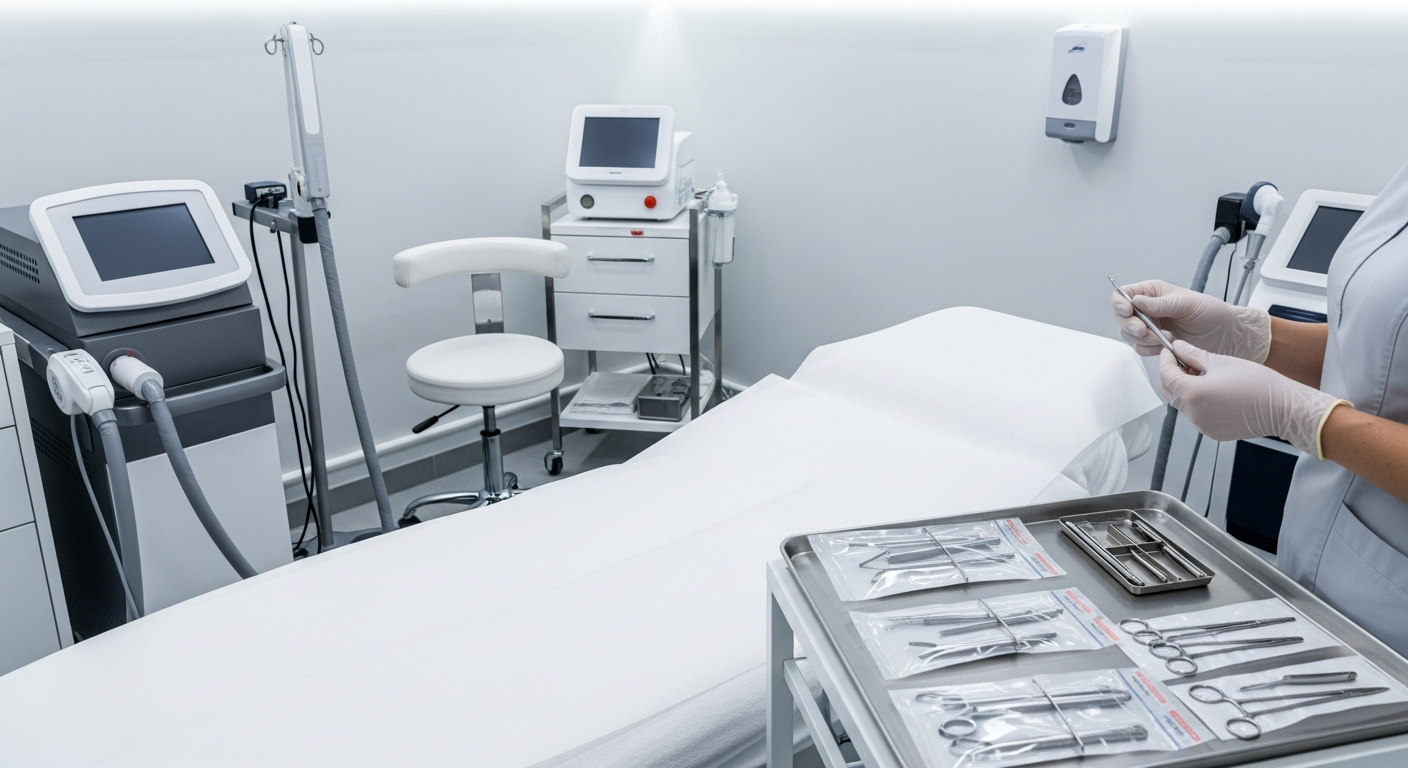
Med Spa Infection Control: Best Practices for Safety
Med spa infection control is the systematic application of sanitation and sterilization protocols designed to eliminate pathogens and prevent cross-contamination within an aesthetic clinic. These OSHA-aligned practices involve rigorous hand hygiene, the use of EPA-registered disinfectants on clinical surfaces, and the strict sterilization of reusable instruments to maintain a professional, safe environment.
OSHA-Aligned Sanitation and Hygiene Standards
Every med spa must establish a written exposure control plan that aligns with federal safety regulations. This plan dictates how staff manage potential pathogens and ensures consistent hygiene across all treatment areas.
Hand Hygiene Protocols
Proper handwashing is the primary defense against the spread of germs. Practitioners must wash hands with antimicrobial soap before and after every client contact and after removing gloves.
When hands are not visibly soiled, alcohol-based hand rubs are an acceptable alternative. Consistent hygiene prevents the transfer of microorganisms between the practitioner and the client.
Personal Protective Equipment (PPE) Usage
Single-use gloves are mandatory for all procedures involving broken skin or mucosal contact. Gloves must be changed between every client and never reused or washed.
Additional PPE, such as fluid-resistant gowns and face shields, should be utilized based on the risk of splashing. Correct donning and doffing sequences prevent self-contamination during the removal process.
Treatment Room Disinfection Systems
Clinical surfaces in a med spa require professional-grade disinfection to maintain a sterile atmosphere. This process involves two distinct steps: cleaning to remove debris and disinfecting to kill pathogens.
High-Touch Surface Management
Focus disinfection efforts on high-touch areas such as treatment tables, equipment carts, and stools. These surfaces must be treated with EPA-registered hospital-grade disinfectants after every session.
Ensure that the disinfectant remains wet on the surface for the full contact time specified by the manufacturer. This “dwell time” is critical for achieving total pathogen elimination.
Cleaning Between Client Sessions
Remove all disposable drapes, table paper, and covers immediately after a treatment is completed. Dispose of these items in lined waste containers to prevent environmental contamination.
Wipe down all equipment cables and touchscreens used during the procedure. Using barriers on difficult-to-clean equipment can further reduce the risk of cross-contamination.
Sterilization Standards for Reusable Tools
Any instrument that penetrates the skin or contacts sterile tissue must undergo professional sterilization. Standard cleaning or high-level disinfection is not sufficient for critical medical tools.
The use of a steam autoclave is the industry standard for med spa instrument processing. Maintain detailed logs of every sterilization cycle, including temperature, pressure, and duration data.
Use chemical indicators on every package to verify that sterilization conditions were met. Monthly biological spore testing is necessary to confirm that the autoclave is functioning correctly.
Cross-Contamination Prevention Systems
Preventing cross-contamination requires a strict separation of “clean” and “dirty” workflows. Designate specific areas for instrument cleaning that are physically removed from sterile storage.
Never reach into multi-use containers, such as cream jars or gauze packs, with contaminated gloves. Use sterile applicators or pre-portion supplies into disposable cups before starting a treatment.
Store all sterile supplies in closed cabinets or drawers to protect them from dust and aerosols. Regularly audit these storage areas to ensure packaging remains intact and uncompromised.
