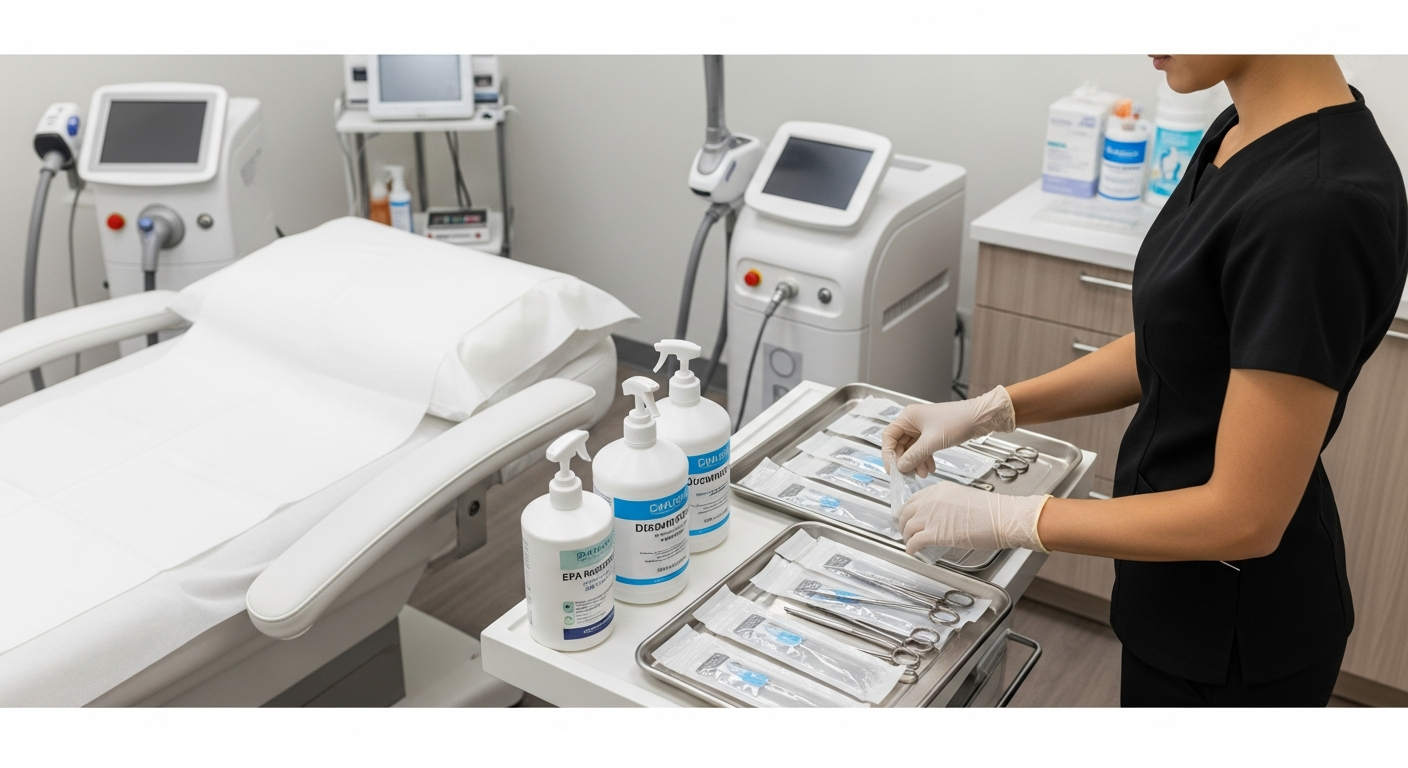
Med Spa Infection Control: Clinical Sanitation Standards
Med spa infection control is the systematic application of sanitation, disinfection, and sterilization protocols designed to prevent the transmission of pathogens during aesthetic procedures. These OSHA-aligned practices protect clients and staff by ensuring treatment rooms, medical devices, and practitioner hygiene meet rigorous clinical safety standards to eliminate cross-contamination risks.
Standardized Hand Hygiene Protocols
Proper hand hygiene is the most effective way to prevent the spread of bacteria and viruses. Practitioners must wash hands with antimicrobial soap before and after every client contact.
When hands are not visibly soiled, alcohol-based hand rubs are acceptable between treatment steps. Consistency in these habits creates a foundation for all other safety measures.
The use of medical-grade gloves is mandatory for all invasive or minimally invasive procedures. Gloves must be changed immediately if they become compromised or between different treatment zones.
Treatment Room Disinfection Systems
Every treatment room requires a high-level disinfection cycle between every client appointment. This process involves cleaning all contact surfaces with EPA-registered intermediate-level disinfectants.
Focus areas include treatment tables, adjustable stools, product counters, and device control panels. Surfaces must remain wet for the full manufacturer-recommended contact time to ensure efficacy.
Protective barriers, such as plastic sheathing or medical-grade paper, should be used on high-touch equipment. These barriers are disposed of and replaced after every single procedure.
Sterilization Standards for Multi-Use Instruments
All reusable instruments that penetrate the skin or contact mucous membranes must undergo full sterilization. This process typically involves ultrasonic cleaning followed by pressurized steam sterilization.
Decontamination: Remove all visible organic matter and debris using enzymatic cleaners before sterilization. This ensures the heat or chemicals can reach all surfaces of the tool.
Sterilization: Use a validated autoclave system to kill all microbial life, including bacterial spores. Regular biological monitoring and chemical indicators must be used to verify the equipment functions correctly.
Storage: Sterilized items must remain in sealed, dated pouches until the moment of use. If a pouch is punctured or wet, the instrument is considered contaminated and must be reprocessed.
Cross-Contamination Prevention Strategies
Preventing cross-contamination requires a strict “clean to dirty” workflow within the med spa. Staff must avoid touching clean supply containers with contaminated gloves during a procedure.
- Single-Use Disposables: Utilize single-use needles, syringes, and applicators whenever possible to eliminate the risk of reuse.
- Unit-Dosing: Dispense only the amount of product needed for a single treatment into a secondary container before the session begins.
- Waste Management: Place all sharps in puncture-resistant containers and dispose of biohazardous waste according to local and federal regulations.
Environmental Maintenance and Air Quality
Clinical safety extends to the physical environment of the med spa. HVAC systems should be regularly maintained to ensure proper air filtration and ventilation in treatment zones.
Floors and non-porous surfaces should be cleaned daily with hospital-grade detergents. Clutter must be minimized in treatment rooms to prevent the accumulation of dust and pathogens.
Staff should receive ongoing training on bloodborne pathogens and infection control updates. Written protocols must be accessible to all team members to ensure uniform compliance across the facility.
