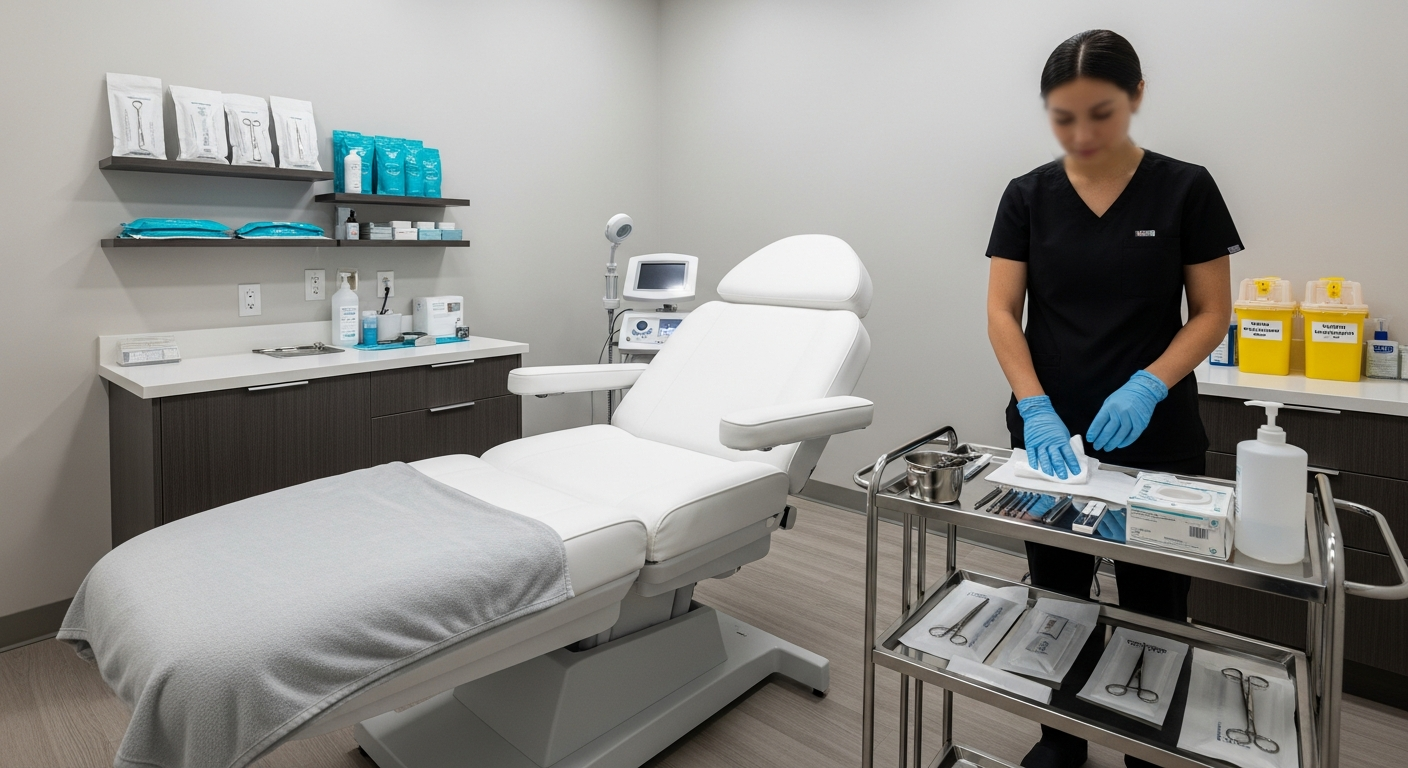
Med Spa Infection Control: Essential Safety Standards
Med spa infection control is the systematic implementation of sanitation and sterilization protocols to prevent pathogen transmission during aesthetic treatments. These standards include OSHA-aligned disinfection of surfaces, proper tool sterilization, and consistent hand hygiene to protect practitioners and clients in a clinical med spa environment.
Core Principles of Med Spa Sanitation
Infection control in a med spa environment requires a multi-layered approach to hygiene.
Consistency in these protocols protects the clinical integrity of the facility and reduces liability.
Every staff member must undergo rigorous training on standard precautions and aseptic techniques.
Facilities must establish a written exposure control plan that is reviewed annually.
This document outlines how the facility manages bloodborne pathogens and environmental risks.
Maintaining clear records of these safety audits is essential for regulatory compliance.
OSHA-Aligned Cleaning and Disinfection
OSHA guidelines mandate the use of intermediate-level disinfectants on all non-porous surfaces.
Surfaces must remain wet for the manufacturer-specified contact time to ensure efficacy.
Clinical supervisors should maintain detailed logs documenting the daily disinfection of treatment areas.
All high-touch points, including treatment beds and stools, require cleaning between every client.
Using disposable barriers can supplement disinfection for equipment that is difficult to reach.
Standardizing these cleaning intervals minimizes the risk of environmental pathogen reservoirs.
Sterilization Standards for Reusable Tools
Any instrument that penetrates the skin or contacts mucous membranes must undergo full sterilization.
Autoclaves are the industry standard, requiring weekly biological monitoring to verify operational success.
Sterilized items should remain in sealed pouches until the moment of use during a procedure.
- Decontamination: Manual cleaning of debris before the sterilization cycle.
- Packaging: Using chemical indicator tape to confirm heat exposure.
- Storage: Keeping sterile packs in clean, dry, and enclosed cabinets.
Preventing Cross-Contamination in Treatment Rooms
Cross-contamination occurs when pathogens move between surfaces, practitioners, or clients.
Establishing a “clean-to-dirty” workflow prevents the accidental spread of bioburden during treatments.
Strict separation of clean supplies and contaminated waste is vital for maintaining a safe zone.
Practitioners must avoid touching common surfaces like keyboards or phones with contaminated gloves.
If a surface is touched accidentally, it must be disinfected before the next treatment begins.
Organizing the treatment room layout helps facilitate a hands-free environment where possible.
Personal Protective Equipment (PPE) Usage
Practitioners must use appropriate gloves, masks, and eye protection for every aesthetic procedure.
PPE should be donned and doffed according to standard clinical sequences to avoid self-contamination.
Gloves must be changed between every client and immediately if they become compromised.
Hand hygiene remains the most effective way to prevent the spread of clinical infections.
Hands must be washed with soap and water or sanitized before putting on new gloves.
This practice should be repeated immediately after glove removal and before leaving the room.
Environmental Surface Management
Waste disposal systems must include puncture-resistant sharps containers for all needles and lancets.
These containers should be located at the point of use to prevent transport accidents.
Biohazardous waste must be bagged and labeled according to state and federal safety regulations.
Linens and robes used in the med spa should be laundered using heat and appropriate detergents.
Soiled linens must be handled with gloves and transported in leak-proof bags to laundry areas.
Clean linens must be stored in a designated area away from any potential sources of moisture.
