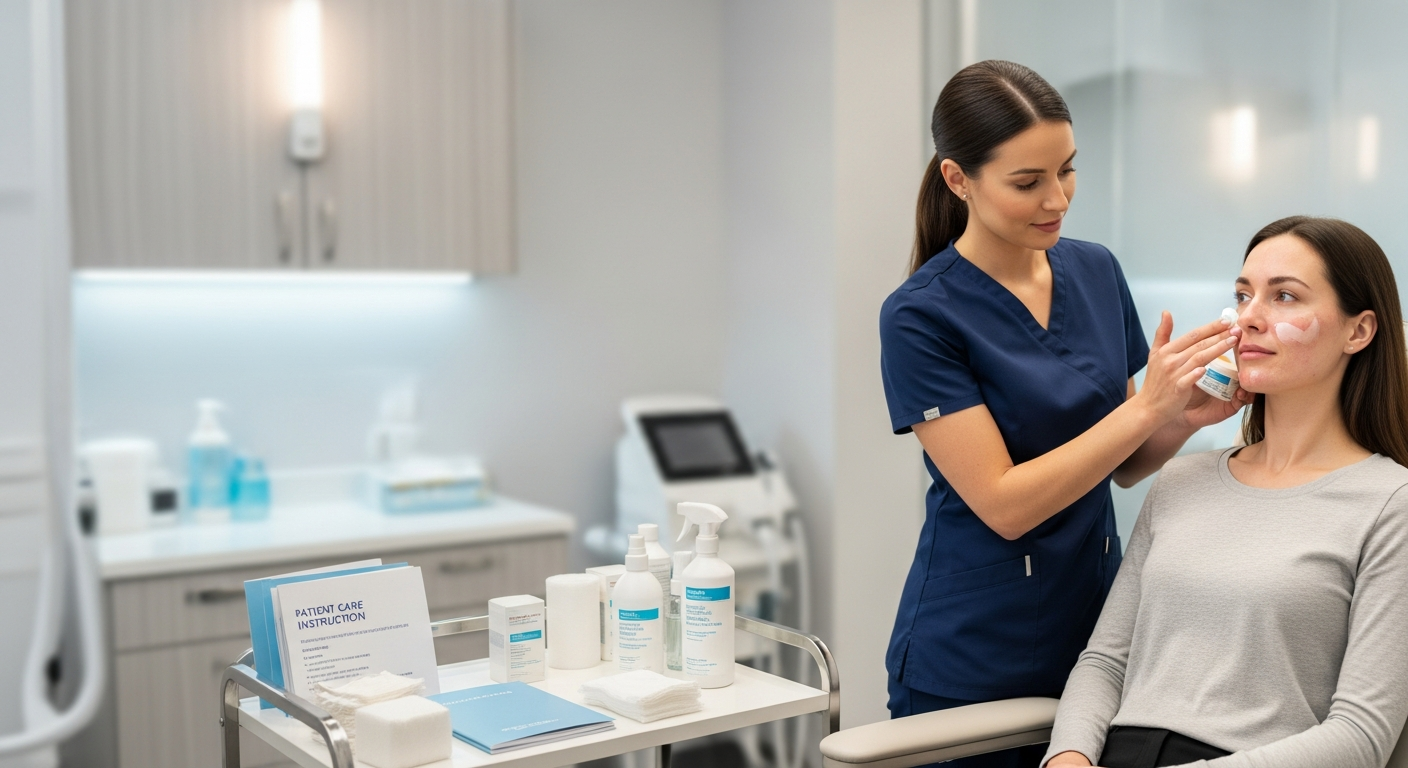
Med Spa Post-Treatment Management: Clinical Protocols
Post-treatment management in med spa facilities involves implementing standardized clinical protocols to monitor and guide patient recovery after aesthetic procedures. These systems focus on managing erythema, inflammation, and downtime. By utilizing consistent workflows for laser and microneedling aftercare, clinics minimize complications and ensure optimal skin barrier restoration for every patient.
Standardizing Post-Laser Recovery Protocols
Effective post-treatment management in med spa settings begins with controlling thermal energy retention. Standardized protocols must address the immediate heat profile following ablative or non-ablative laser sessions.
Clinical supervisors should implement cooling phases to reduce interstitial heat. This helps prevent prolonged erythema and potential thermal injury to surrounding healthy tissue.
- Thermal Regulation: Utilize controlled cooling to stabilize skin temperature immediately post-laser.
- Hydration Monitoring: Implement systems to track and manage trans-epidermal water loss (TEWL) during the first 48 hours.
- Activity Restrictions: Provide clear clinical guidelines regarding heat exposure and physical exertion.
Microneedling Downtime Management Systems
Managing recovery after mechanical collagen induction therapy requires a focus on micro-channel closure. The clinical priority is protecting the compromised skin barrier from environmental pathogens.
Standardized workflows should dictate a “clean period” where no foreign substances are applied to the treated area. This period typically lasts until the micro-channels have naturally sealed.
Providers must monitor for normal inflammatory responses versus adverse reactions. Consistent documentation of healing stages allows for early intervention if the inflammatory window extends beyond normal parameters.
Chemical Peel Aftercare and Exfoliation Control
Post-treatment management in med spa environments for chemical peels centers on desquamation. Clinical protocols must emphasize the prevention of premature exfoliation or “picking” of the skin.
Standardized systems ensure patients understand the difference between expected peeling and abnormal irritation. This reduces the risk of post-inflammatory hyperpigmentation (PIH) in various skin types.
Managing Inflammation and Erythema
Inflammation is a necessary part of the wound-healing cascade. However, clinical supervisors must set strict thresholds for what constitutes a healthy inflammatory response.
If erythema persists beyond the expected clinical window, standardized protocols should trigger a follow-up assessment. This systematic approach ensures patient safety across all aesthetic providers.
Implementing Standardized Recovery Workflows
A successful med spa relies on protocol consistency over individual provider judgment. This creates a predictable environment for both the clinical team and the patients.
Every procedure must conclude with a documented recovery plan. This plan should be uniform across the clinic to ensure that every patient receives the same high standard of care.
- Documentation: Record all post-treatment observations using standardized clinical terminology.
- Symmetry of Care: Ensure all aesthetic providers follow the same recovery steps for every laser or peel.
- Clear Communication: Use structured handouts that focus on clinical signs of healing rather than subjective feelings.
By focusing on these systems, med spas can maintain a high level of clinical excellence. Consistent management of the post-treatment phase is essential for successful aesthetic outcomes.
