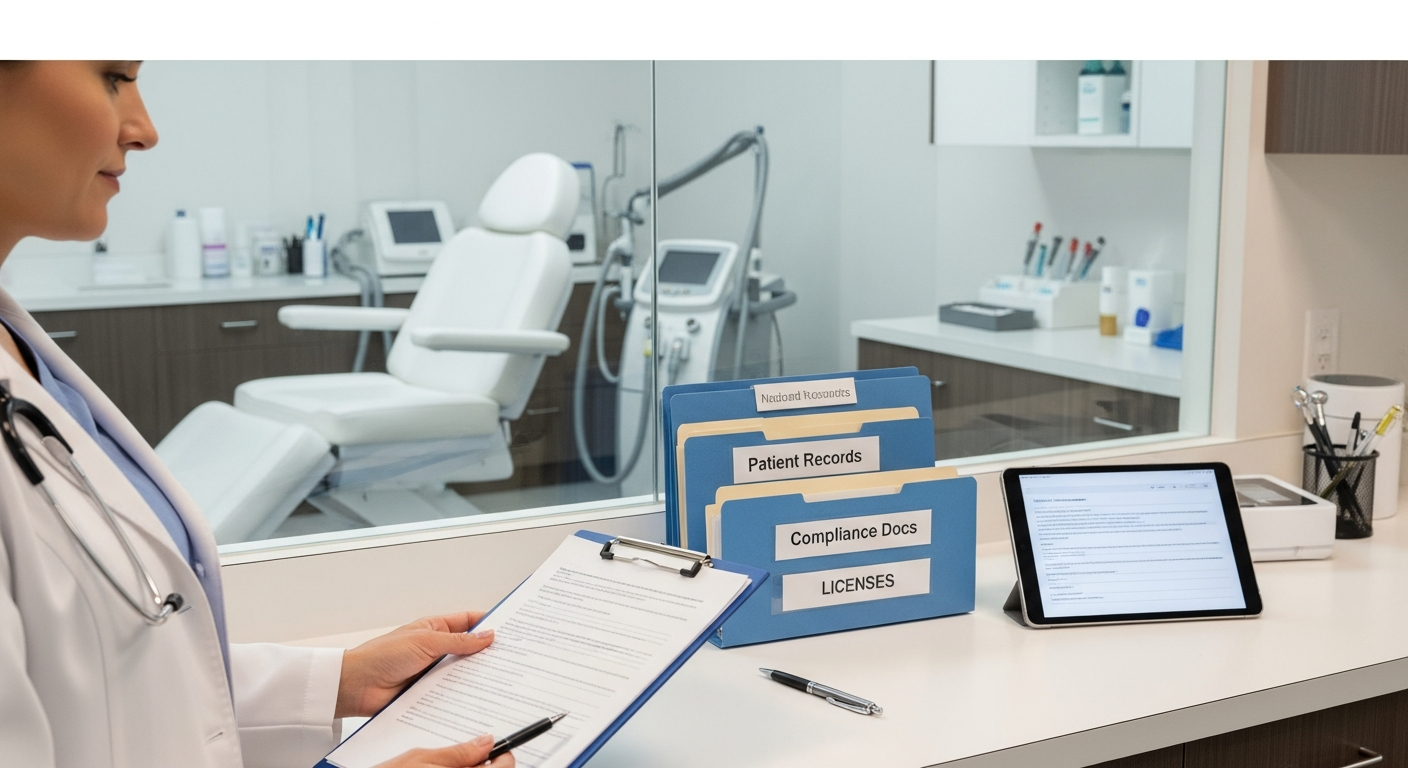
Med Spa Regulations: A Guide to US Compliance
Med spa regulations are state-specific legal mandates that govern the operation, ownership, and clinical supervision of medical aesthetic practices. These laws define who can own a clinic, the required qualifications for medical directors, and the specific scope of practice for clinicians performing medical-grade treatments like injectables and laser therapies.
Understanding State-Specific Med Spa Regulations
Every state in the U.S. maintains its own medical board and nursing board regulations.
These rules dictate how a med spa must be structured legally and operationally.
Failure to follow state-specific mandates can lead to heavy fines or license revocation.
The Corporate Practice of Medicine Doctrine
Many states follow the Corporate Practice of Medicine (CPOM) doctrine.
This legal principle generally prohibits non-physicians from owning a medical practice.
In these states, a med spa must be owned by a licensed physician.
Business Structure and MSO Models
Non-physician owners often utilize a Management Services Organization (MSO) model.
The MSO handles administrative tasks while a professional corporation manages clinical care.
Compliance requires a clear separation between business operations and medical decisions.
Medical Supervision and Licensing Requirements
A med spa provides medical treatments, necessitating strict clinical oversight.
Regulatory bodies require a designated medical director to oversee all procedures.
The level of required supervision varies significantly from state to state.
The Role of the Medical Director
The medical director is responsible for all clinical protocols and patient safety.
They must be a licensed physician, though some states allow certain advanced practitioners.
State laws define if the director must be on-site or available via telecommunication.
Professional Scope of Practice
State boards define which practitioners can perform specific aesthetic treatments.
Regulations specify the roles of Registered Nurses, Nurse Practitioners, and Physician Assistants.
Performing treatments outside one’s legal scope is a major compliance violation.
Legal Scope of Aesthetic Practice
In a med spa, procedures like Botox or laser hair removal are medical acts.
The law treats these as the practice of medicine rather than traditional salon services.
Specific legal steps must be taken before any treatment is administered to a patient.
The Good Faith Examination
Most states require a “good faith exam” before a patient receives medical treatment.
A physician or qualified mid-level provider must personally evaluate the patient.
This exam ensures the treatment is appropriate and safe for the individual.
Delegation of Medical Tasks
Physicians can delegate certain medical tasks to qualified staff members.
Delegation must comply with state-specific written protocols and supervision rules.
The delegating physician remains legally responsible for the delegated treatment outcomes.
Inspection Readiness and Documentation Basics
Maintaining a med spa requires constant readiness for regulatory inspections.
Regulatory agencies may audit patient records, safety protocols, and facility standards.
Proper documentation is the cornerstone of a compliant and defensible practice.
Essential Compliance Documentation
- Standard Operating Procedures (SOPs): Written protocols for every medical treatment offered.
- Personnel Files: Up-to-date copies of licenses, certifications, and training logs for all staff.
- Patient Medical Records: Accurate charts including consent forms and treatment notes.
- Adverse Event Logs: Documentation of any complications and the subsequent clinical response.
Safety and Facility Standards
Facilities must meet specific OSHA and HIPAA standards to remain compliant.
This includes proper biohazard disposal, needle safety, and patient privacy protections.
Regular internal audits help ensure the med spa stays prepared for official inspections.
