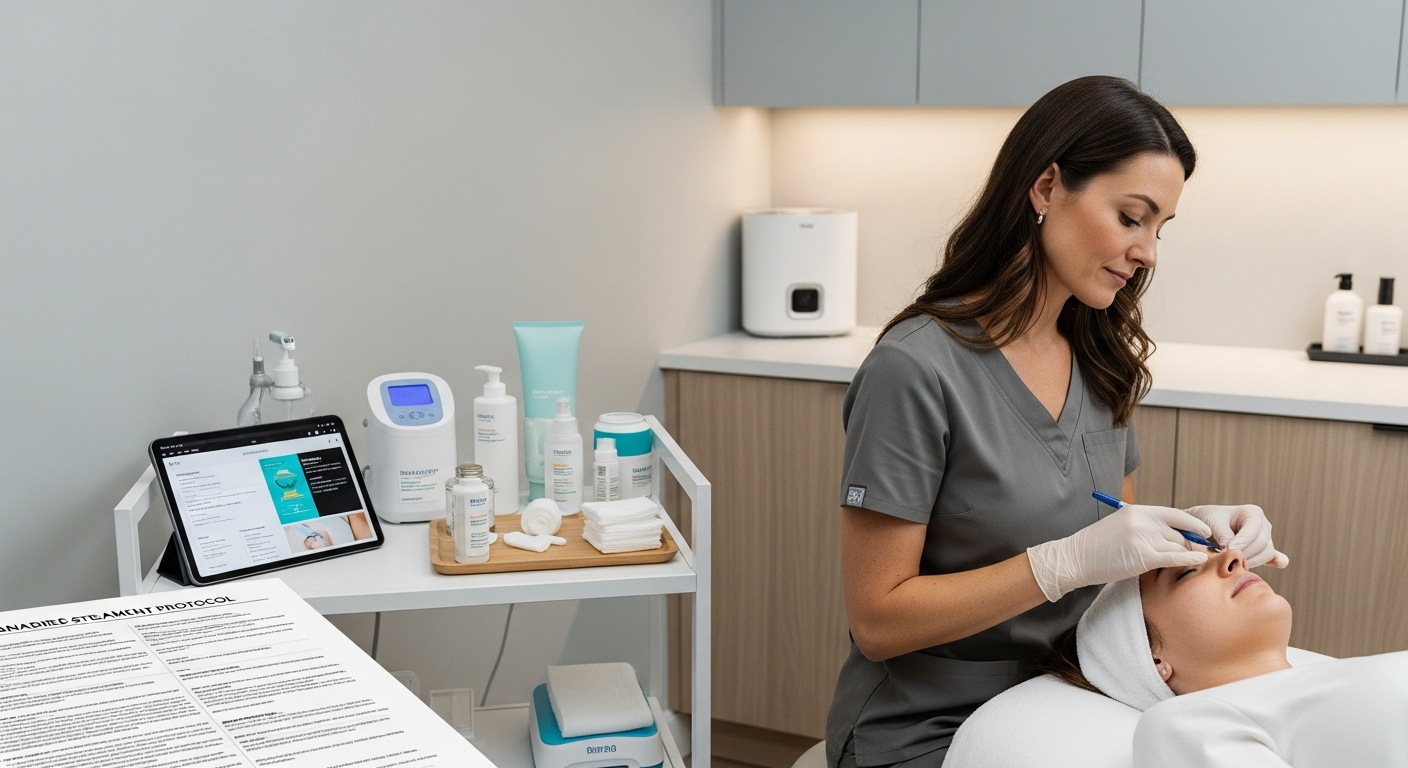
Post-Treatment Management in Med Spa Clinical Workflows
Post-treatment management in med spa settings is the systematic application of clinical protocols designed to monitor healing, mitigate side effects, and optimize skin recovery after aesthetic procedures. These structured workflows standardize care for laser treatments, microneedling, and chemical peels, ensuring consistent patient outcomes and safety across the entire clinical practice.
Standardizing Post-Laser Recovery Protocols
Effective recovery after laser therapy requires immediate cooling and heat dissipation to prevent prolonged thermal injury to the dermis.
Med spa clinicians must implement standardized intervals for checking skin temperature and applying non-occlusive protective barriers to the treated area.
Standardized protocols ensure every patient receives consistent instructions regarding sun avoidance and the management of expected crusting or bronzing.
Managing Erythema and Thermal Damage
Clinicians must monitor erythema closely during the first 48 hours to distinguish between normal inflammatory responses and potential thermal burns.
Protocol-driven management involves scheduled follow-up assessments to evaluate the transition from acute redness to the proliferative phase of healing.
Microneedling Downtime Management
Post-treatment management in med spa environments for microneedling focuses on protecting the open micro-channels created during the procedure.
Clinical workflows should dictate a strict 24-hour window where no active ingredients are applied to prevent granulomas or systemic absorption.
Providers must educate patients on the necessity of maintaining a clean environment to prevent secondary infections while the physical barrier is compromised.
Chemical Peel Aftercare Systems
Managing the recovery of a chemical peel requires a structured timeline for desquamation and re-epithelialization of the skin layers.
Standardized systems prevent patients from prematurely peeling or picking at the skin, which can lead to post-inflammatory hyperpigmentation or scarring.
Med spas should utilize clear, written documentation that outlines the expected visual changes from the day of the peel through full recovery.
Clinical Management of Inflammation and Erythema
Consistent inflammation management is critical for reducing patient discomfort and preventing adverse reactions like persistent edema.
Standardized workflows include:
- Scheduled application of cold compresses or cooling devices.
- Specific guidelines for when to escalate care to a clinical supervisor.
- Uniform reporting of redness levels using a standardized grading scale.
Benefits of Standardized Recovery Workflows
Relying on standardized protocols rather than individual provider judgment reduces the margin for error in a fast-paced med spa environment.
Uniform systems allow clinical supervisors to track recovery trends and identify if specific equipment settings are causing outliers in healing times.
Consistency in post-treatment management ensures that every patient, regardless of the treating provider, receives the highest standard of clinical care.
