Med Spa Infection Control and Clinical Safety Standards
Med spa infection control is the implementation of systematic sanitation, disinfection, and sterilization protocols designed to eliminate the transmission of pathogens during aesthetic treatments. These clinical safety measures include adhering to OSHA standards, maintaining rigorous hand hygiene, using personal protective equipment, and ensuring all treatment surfaces and tools meet strict decontamination requirements.
Core Components of Med Spa Infection Control
Establishing a sterile environment begins with standardized clinician behavior. Hand hygiene is the most effective way to prevent the transfer of microorganisms between staff and clients.
Clinicians must use antimicrobial soap or high-alcohol hand rubs before and after every treatment. This practice is mandatory even when gloves are used during the procedure.
Personal protective equipment (PPE) creates a necessary barrier between the clinician and potential contaminants. Gloves, masks, and eye protection must be selected based on the specific treatment risk.
Environmental Cleaning and Disinfection
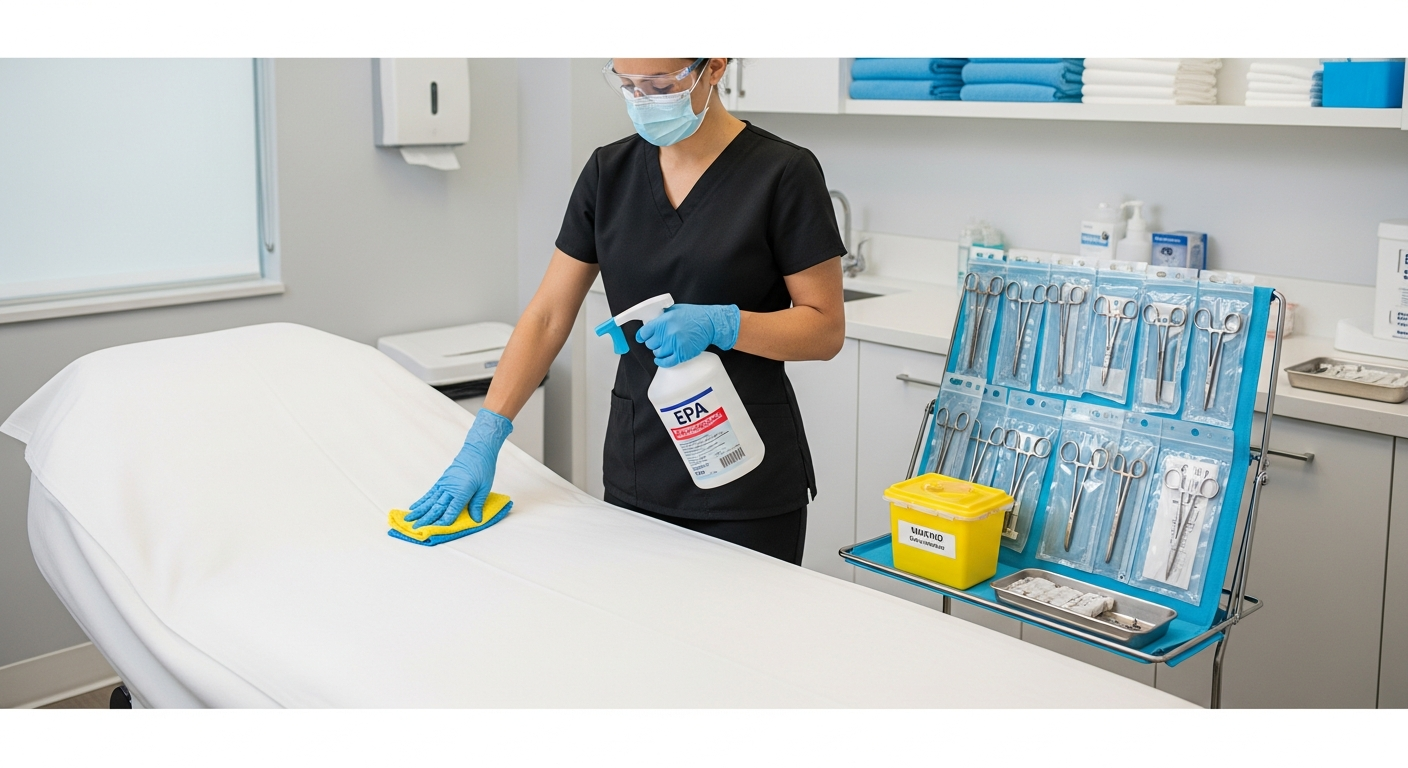
Treatment rooms require high-level disinfection between every client session to maintain safety. All non-porous surfaces must be treated with EPA-registered, hospital-grade disinfectants.
Treatment Room Turnover Protocols
Surface disinfection involves a two-step process: cleaning to remove visible debris and disinfecting to kill pathogens. The disinfectant must remain wet on the surface for the full manufacturer-recommended contact time.
High-touch areas like treatment tables, Mayo stands, and equipment panels require focused attention. Any porous items or single-use supplies must be discarded immediately after use in appropriate waste containers.
Linens and headrest covers should be changed after every appointment. Use only professional laundry services that follow thermal or chemical disinfection standards for medical-grade textiles.
Sterilization and Instrument Processing
Any reusable tool that penetrates the skin or contacts mucous membranes must undergo full sterilization. This process ensures the complete destruction of all microbial life, including bacterial spores.
Instrument Processing Systems
The sterilization workflow follows a strict path from the contaminated zone to the clean zone. Instruments are first cleaned of organic matter before being placed in an ultrasonic cleaner.
Once cleaned, tools are dried, packaged in sterilization pouches with chemical indicators, and processed in a validated autoclave. Each cycle must be logged and monitored for pressure and temperature accuracy.
Stored instruments must remain in their sealed pouches until the moment of use. If a pouch becomes damp or torn, the instrument is considered contaminated and must be reprocessed.
Preventing Cross-Contamination
Cross-contamination occurs when pathogens are transferred from one surface or person to another through improper technique. A “clean-to-dirty” workflow prevents the spread of bacteria throughout the facility.
Clinical supervisors should implement “point-of-use” disposal for sharps to prevent needle-stick injuries. Sharps containers must be puncture-resistant, labeled, and replaced when they reach the fill line.
Regular safety audits ensure that all staff members adhere to these established protocols. Consistent training on OSHA-aligned practices protects both the reputation of the med spa and the health of the public.
