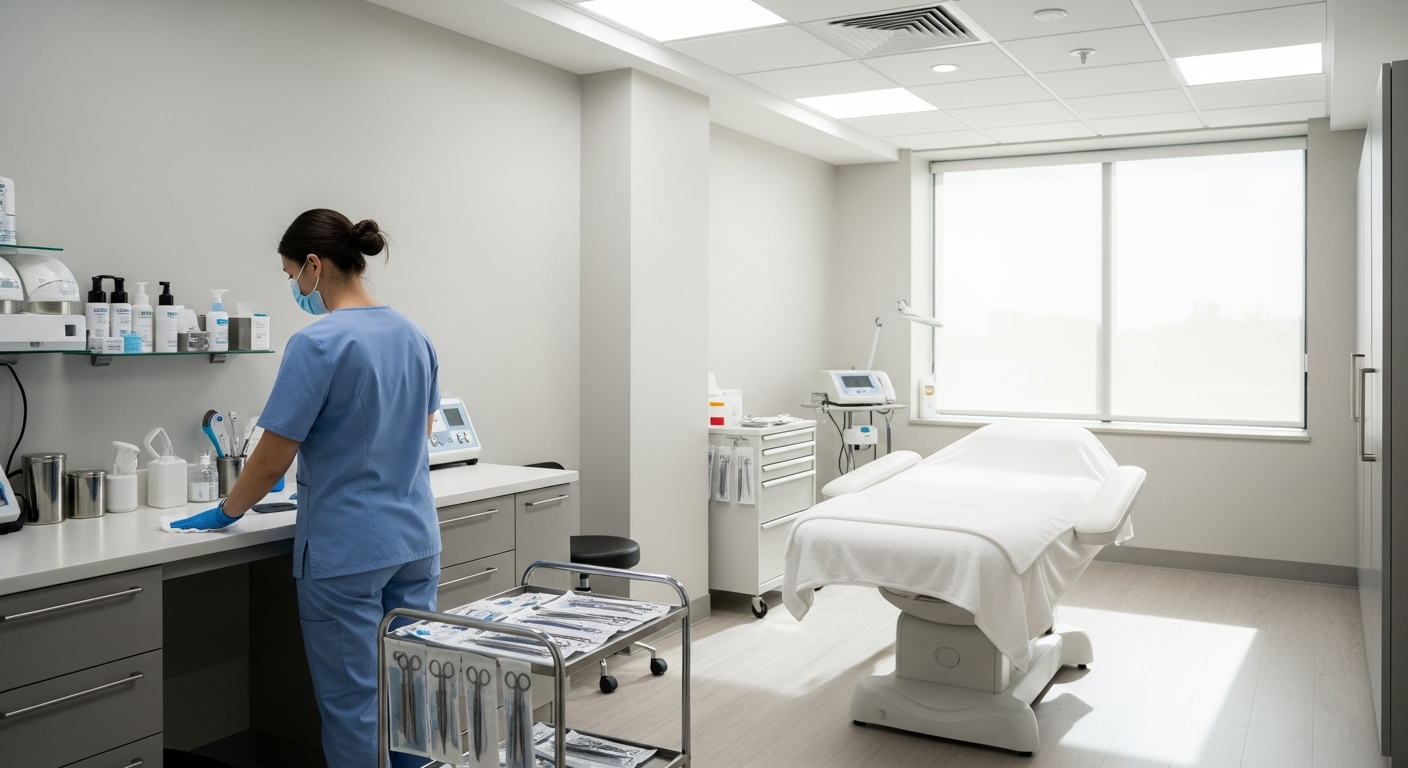
Med Spa Infection Control and Clinical Safety
Med spa infection control is a systematic approach to preventing the spread of pathogens through rigorous sanitation, disinfection, and sterilization protocols. These OSHA-aligned practices protect both clients and practitioners by establishing standard operating procedures for treatment room hygiene, hand washing, and the use of personal protective equipment.
Core Sanitation and Hygiene Standards
Every med spa must establish a baseline for clinical hygiene.
This begins with strict hand-washing protocols for all practitioners.
Hands must be cleaned before and after every client interaction.
Standardized hand hygiene involves using antimicrobial soap.
Alcohol-based hand rubs are used when hands are not visibly soiled.
This practice forms the first line of defense against cross-contamination.
Staff must maintain short, clean fingernails to prevent buildup.
Jewelry should be minimized in clinical areas to reduce bacteria.
Clean uniforms or scrubs must be worn to maintain a professional environment.
Systematic Treatment Room Disinfection
Treatment rooms require thorough disinfection between every appointment.
All non-porous surfaces must be wiped down using EPA-registered disinfectants.
This include treatment tables, stools, and counter spaces.
High-Touch Surface Management
Focus on surfaces frequently touched during a treatment session.
Light switches, door handles, and equipment buttons require attention.
Disinfectants must remain wet for the full manufacturer-recommended time.
Disposable barriers can be used on difficult-to-clean equipment.
These barriers must be replaced after every single use.
Using barriers reduces the chemical wear on sensitive aesthetic devices.
Instrument Sterilization and Reprocessing
Any tool that penetrates the skin must be sterile.
Med spa facilities must use either single-use disposables or autoclaves.
Reusable metal instruments require a multi-step cleaning process.
Instruments are first cleaned to remove any visible debris.
They are then placed in an ultrasonic cleaner with enzymatic solution.
Finally, tools are sterilized in an autoclave using heat and pressure.
Sterilization cycles must be monitored using chemical indicators.
Biological indicators should be used weekly to verify autoclave function.
Documentation of every sterilization load is required for compliance.
Cross-Contamination Prevention Strategies
Preventing the transfer of pathogens requires physical separation.
Clean supplies must be stored in closed cabinets away from sinks.
Soiled linens and disposables must be handled as biohazardous material.
Personal Protective Equipment (PPE) Protocols
Practitioners must wear appropriate PPE during all clinical treatments.
Medical-grade gloves must be changed between clients and tasks.
Gloves do not replace the need for thorough hand washing.
Face masks and eye protection are necessary during fluid-heavy treatments.
PPE acts as a physical barrier against splashes or airborne particles.
Proper donning and doffing techniques are essential to avoid self-contamination.
All sharps must be disposed of in puncture-resistant containers.
These containers should be located as close to the treatment area as possible.
Proper sharps management is a critical component of OSHA compliance.
